


Storyteller
Author 2 Occupation
Imagine 27 square kilometers of water at an average depth of five feet. From a fishing perspective, it’s like being on a tropical flat—but you’re in Tuscany.
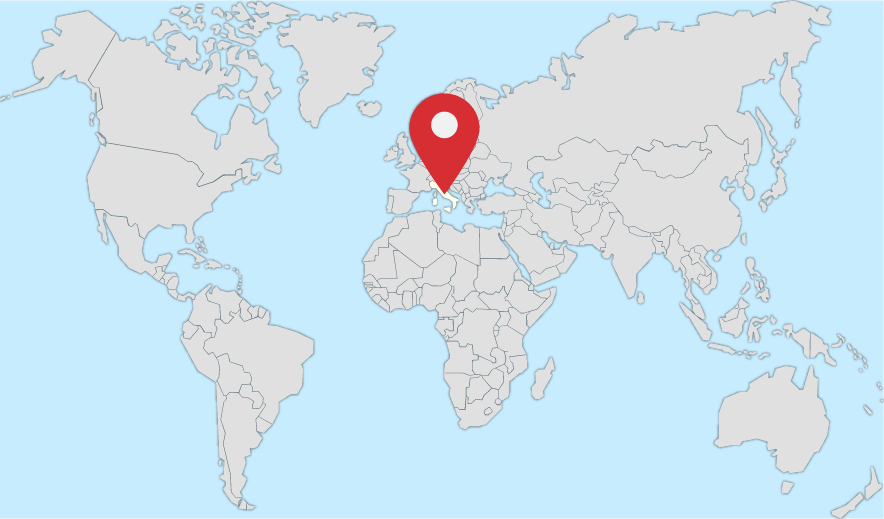
This is the lagoon of Orbetello. Here, fishers have relied on the lagoon’s abundance to earn their living for millennia, catching sea bass and bream, femminelle crabs and silver eels, and above all, the famous gray mullet, whose egg sacs are cured to create bottarga, one of the rarest and most expensive seafood delicacies on the planet.
Bottarga di Orbetello tells a unique story of the lagoon’s fragile yet beautiful ecosystem, the rare fish and bird species that thrive there, and the ancient connection between fishermen and the lagoon. To taste bottarga from Orbetello is to get a sense for the story behind the exquisite flavor and to understand the need to protect the age-old practices that result in the production of this delicacy. It is to sustain the work of the Fishermen’s Cooperative, that guards the lagoon’s waters and ensures that the human and non-human communities of Orbetello remain resilient, as they have always been, across generations.
It is a bright, clear day in early October 2022. I travel two hours by train up to Orbetello from Rome, passing through the rolling hills of Lazio and into the Maremma district of southern Tuscany. Arriving early in the morning, I pull into the compound of the Cooperativa dei Pescatori di Orbetello, the Orbetello fishermen’s trust, situated on the edge of a beautiful lagoon, the body of water I am here to see.
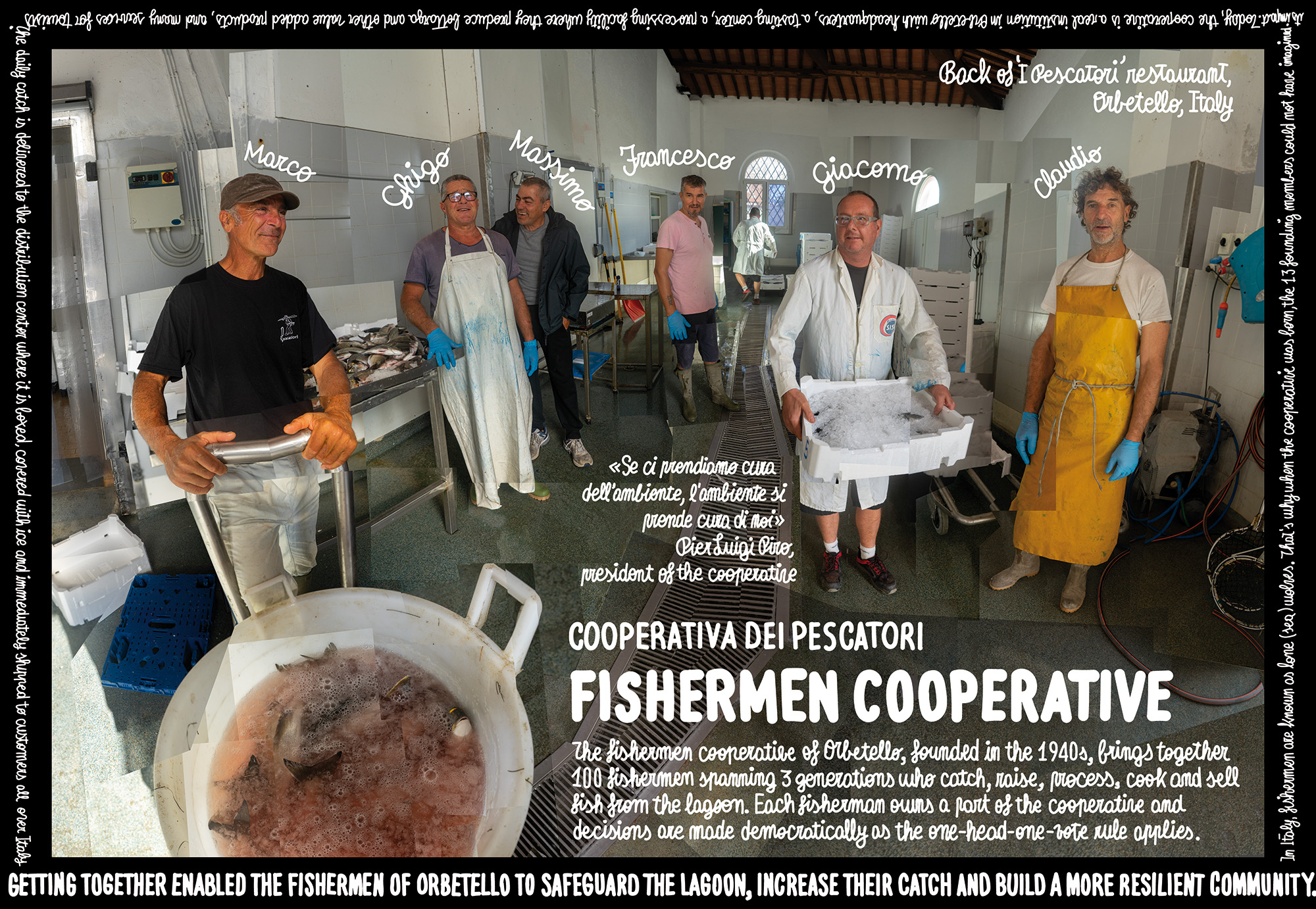
Everything seems quiet from the outside, but as soon as I peel my eyes away from the lagoon’s calm serenity and start poking around, I find the fishermen. They are in a side shed, busy at work. The morning light comes streaming into the open room, buzzing with activity. Fishermen roll crates of fish to and from a loading van, while others sort the day’s catch by size, weighing them by hand. Still others are busy with markers and tape, carefully labeling each crate.
The Orbetello lagoon is exclusively managed and fished by the Pescatori dei Orbetello. Founded in the 1940s, the cooperative brings together 100 fishermen spanning three generations. Each fisherman owns a part of the cooperative, and together, they catch, raise, process, cook, and sell fish and other underwater species from the lagoon. The history of the fishers’ stewardship of these waters goes back through history to the Middle Ages. Legend has it that rights to the lagoon were first granted to the fishermen in 1376 by Pope Gregory XI, who was shipwrecked off the coast of Orbetello and saved by a local fisher. Grateful for his life, the Pope rewarded the man and his community with the rights to the lagoon.
Back in the distribution center, I step into the zig and zag of the movement all around me, trying to find an out-of-the-way spot where I can stand and observe. This effort proves harder than I anticipated, and I end up being moved here, there, and everywhere. The fishers don’t know me at all, but they don’t seem to mind my presence. When they break for a morning snack of pizza al taglio (pizza by the slice), one of them, who I will come to know as Marco, offers me a slice. Hungry from the journey, I accepted and took my leave, finding a quiet spot over the lagoon to eat. I contemplate the scene before me as I munch the pizza offered to me with a nonchalance that belied the gesture’s generosity.
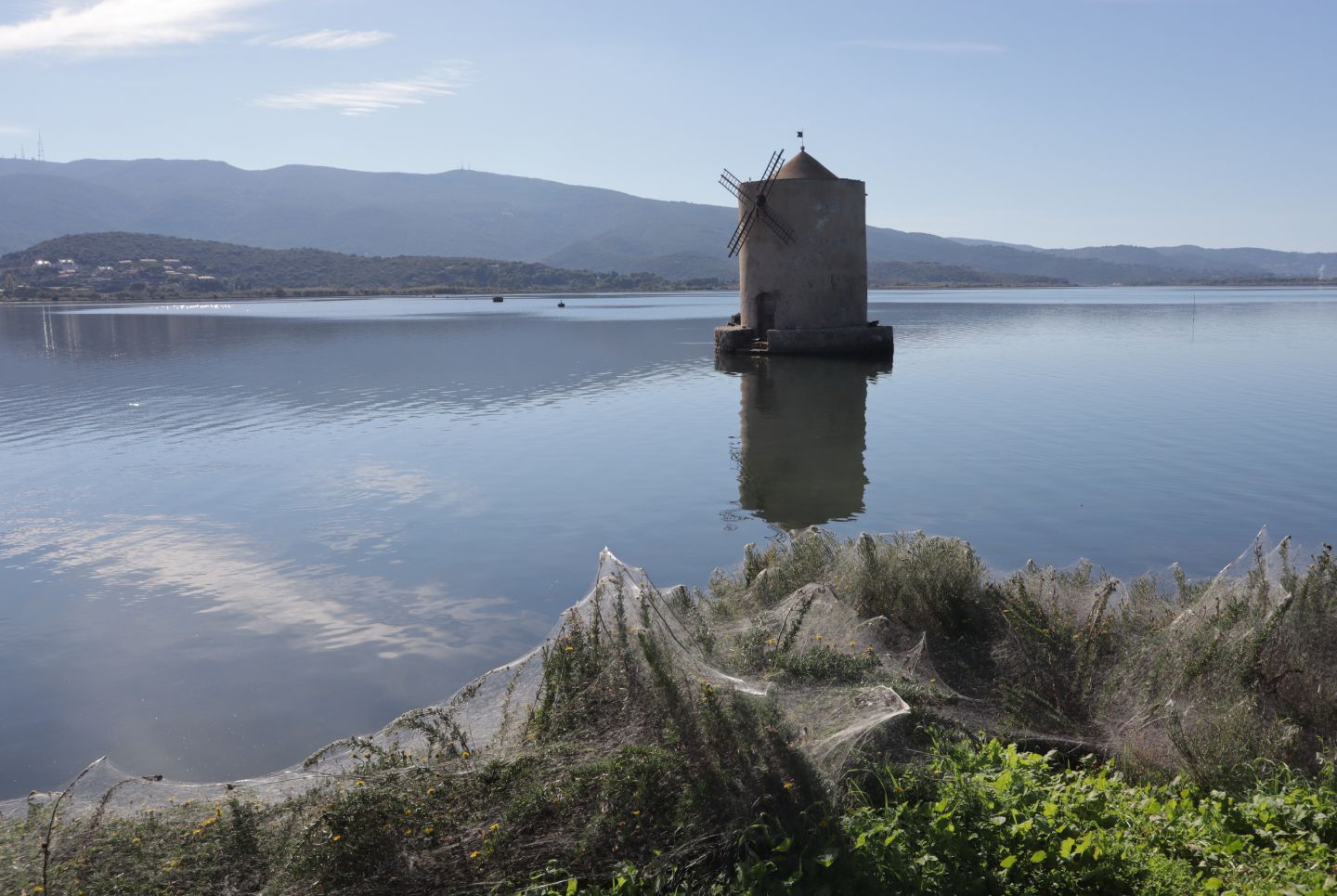
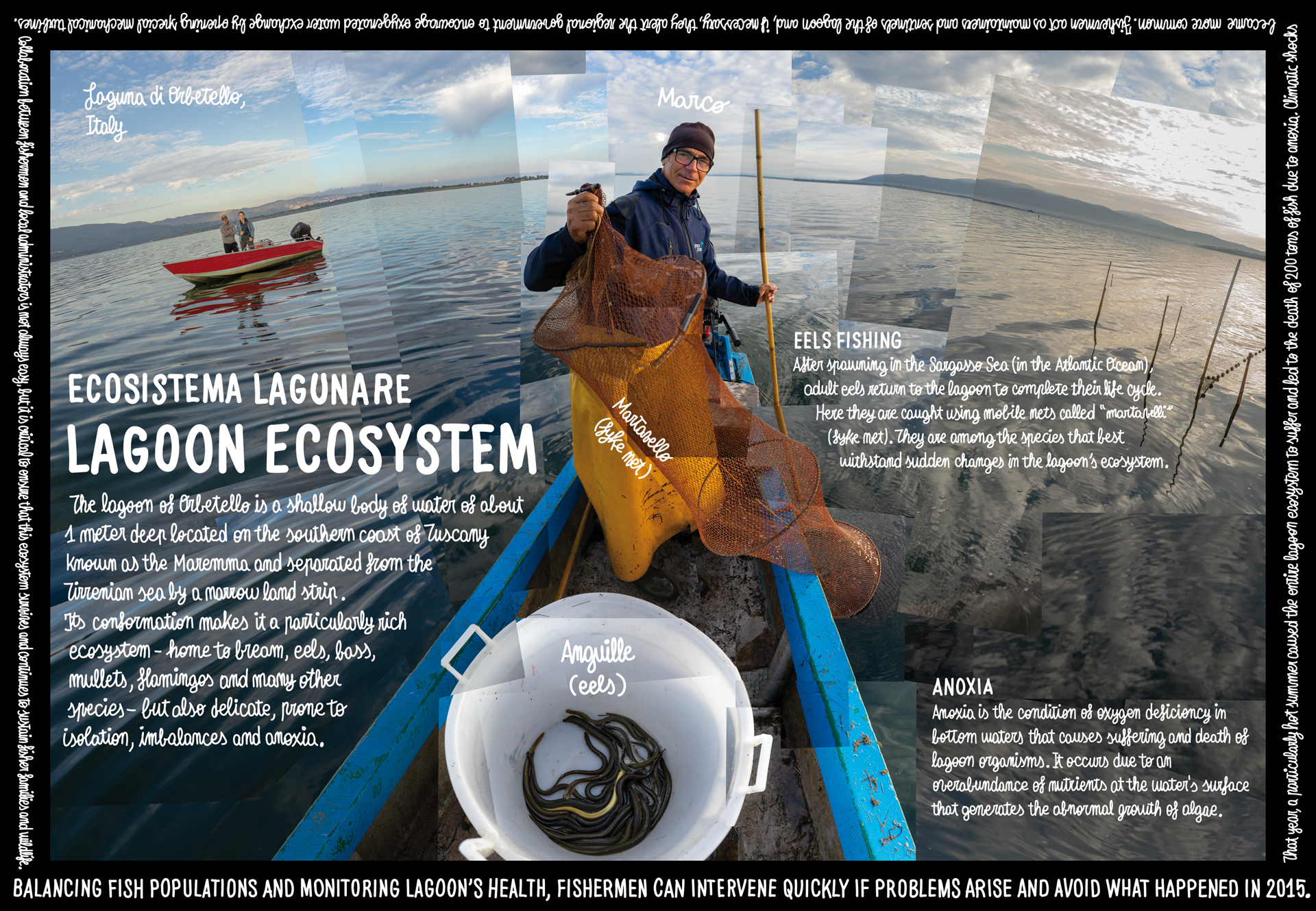
The lagoon of Orbetello is a shallow body of water about one meter deep, separated from the Tyrrhenian Sea by a narrow land strip. The warm, shallow, and salty waters make for a particularly rich ecosystem—home to sea bass, sea bream and mullet, femminelle crabs, and even eels. Though I can’t see them from this vantage point, I know the easternmost part of the lagoon is home to migratory flocks of pink flamingos and rare black-winged stilts who spend their days picking their way through the shallows, looking for fish. While the lagoon acts as a sanctuary to birds and fish alike, I know from my research that the ecosystem here is delicate. Even as I look out at the pristine beauty of the lagoon, I notice how the shrubs along the edges are curiously covered with spider webs, glistening in the sunlight.
Later, I find out that the webs are a result of an influx of midges that arrived earlier that summer, posing a serious threat to the lagoon and related activities. A sign of ecosystem imbalance, the midges arrive en masse, swarming the lights of the Cooperative buildings and restaurant and making it unpleasant for guests to stay and eat. The restaurant, one of the key sources of revenue for the fishers, is forced to close as tourists leave the lagoon.
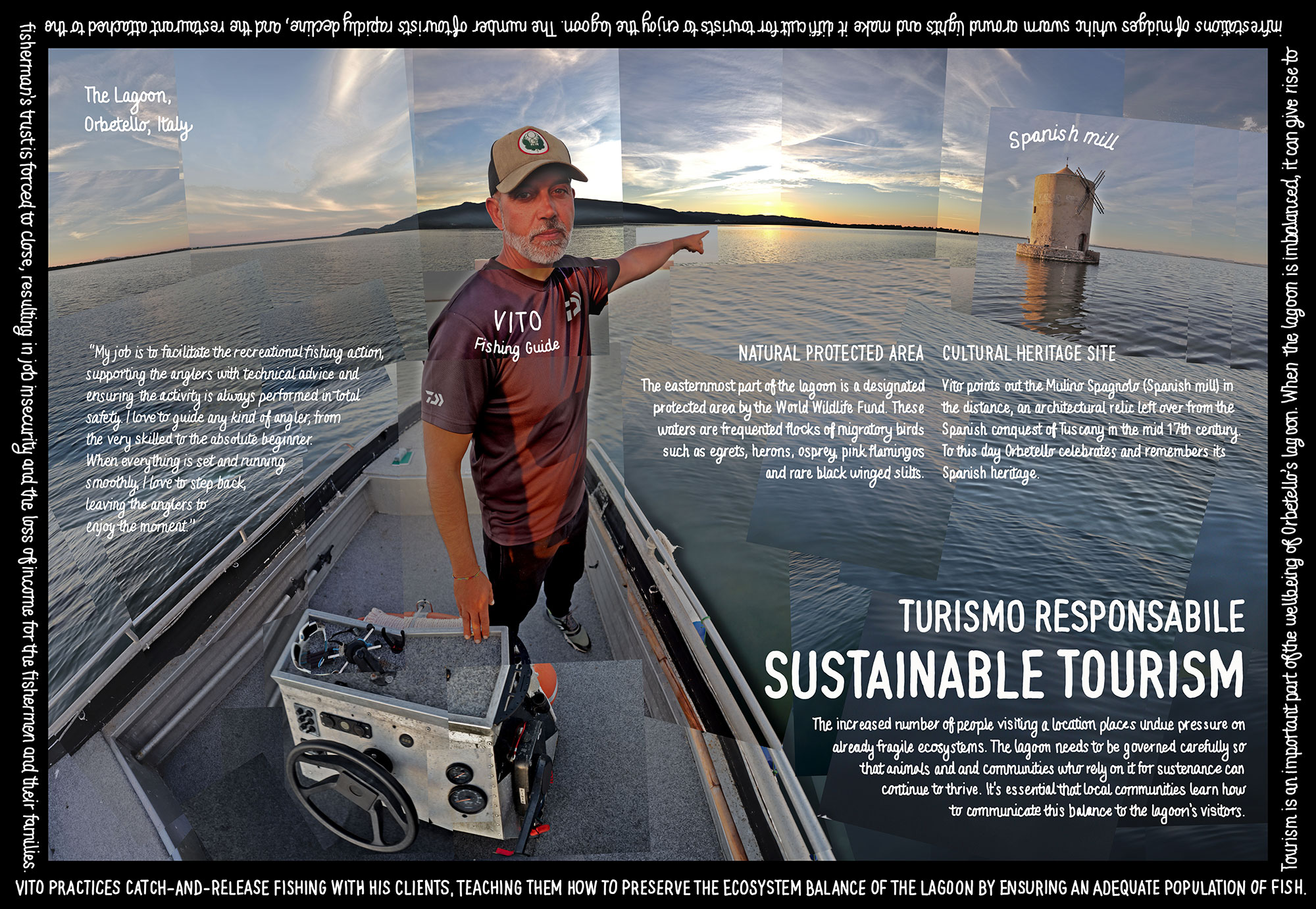
But for now, the day has only just started. I return to the Cooperative to meet my colleague Alberto, who has just arrived, and Vito, Orbetello’s one and only fishing guide who will show us around his beloved lagoon for the next couple of days. We are here to uncover the story of bottarga, a rare product that has been produced in Orbetello for hundreds, if not thousands, of years. I head to the rendezvous in anticipation of what lies ahead.
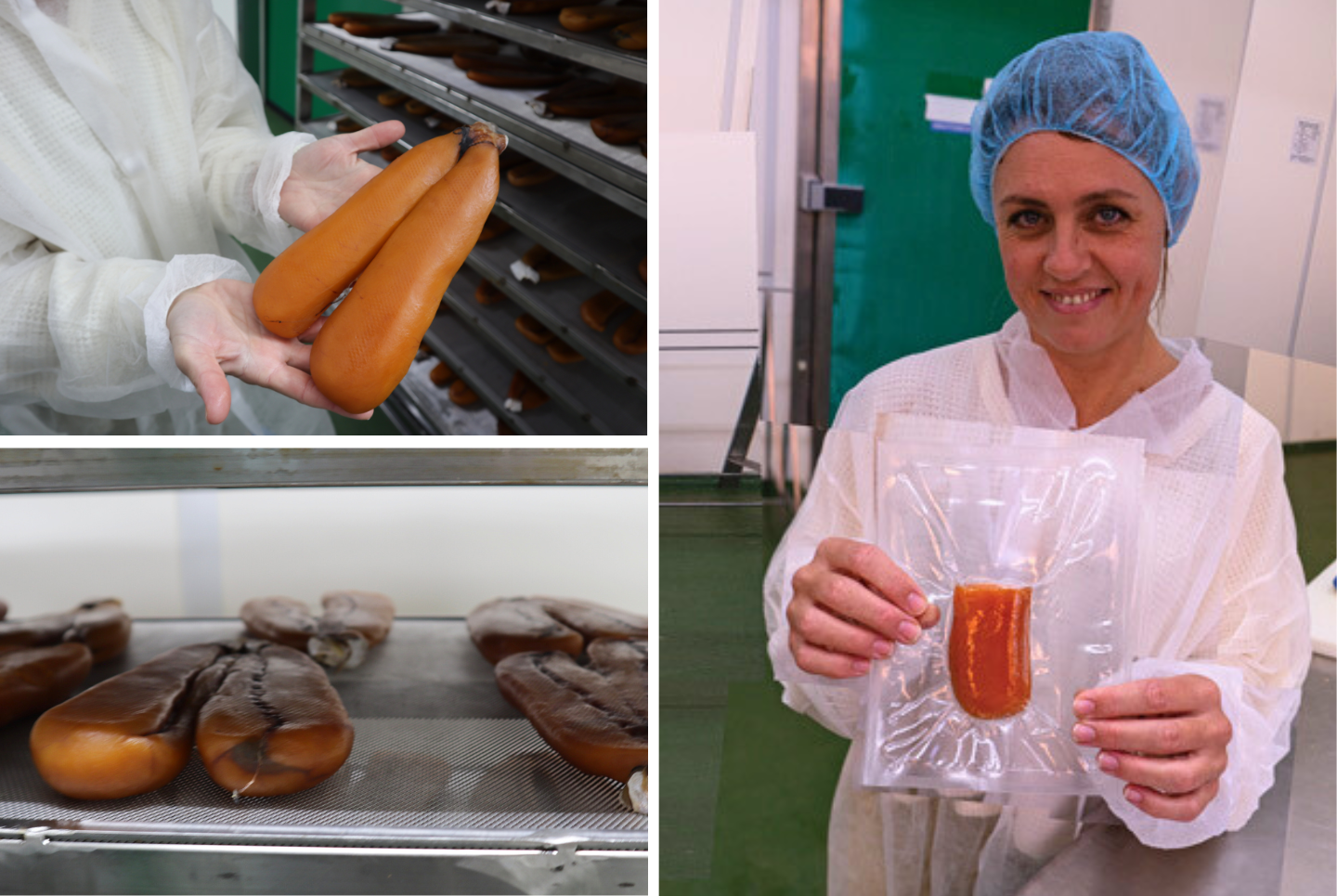
We begin our journey of bottarga discovery at the Cooperative’s state-of-the-art processing unit. The woman who greets us, [name], explains to us that bottarga is a traditional food product of the Lagoon of Orbetello, consisting of the eggs of mullet that are salted and dried while still in the egg sac. It is a method of preparation that has remained the same for over 3,000 years, although equipment has evolved.
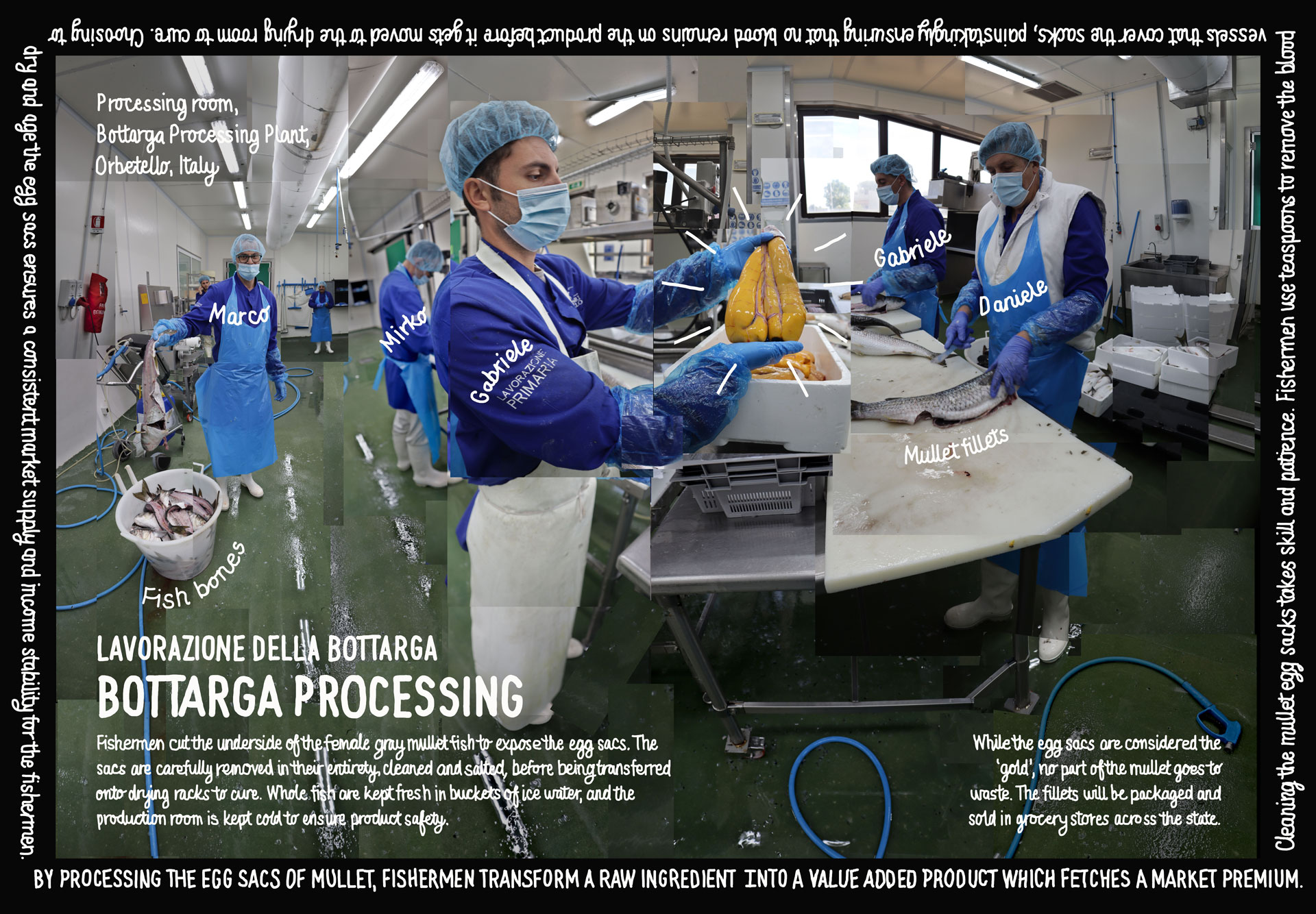
We step into a cold room, filled with fishers in blue plastic coveralls and white aprons, who are working in assembly-like fashion with great efficiency. On one end of the processing table, fishers filet flat-head gray mullet with graceful speed, cutting the underside of the female fish to expose the egg sacs and carefully removing them. The filet gets tossed into a bucket for later use, while the sacs are sent on down the table to the washing station. I laugh to see the brawny fishermen using the tiniest of teaspoons to painstakingly clear the sacs of surrounding blood vessels. I shouldn’t be surprised—the life of a fisherman is, after all, one of practiced patience.
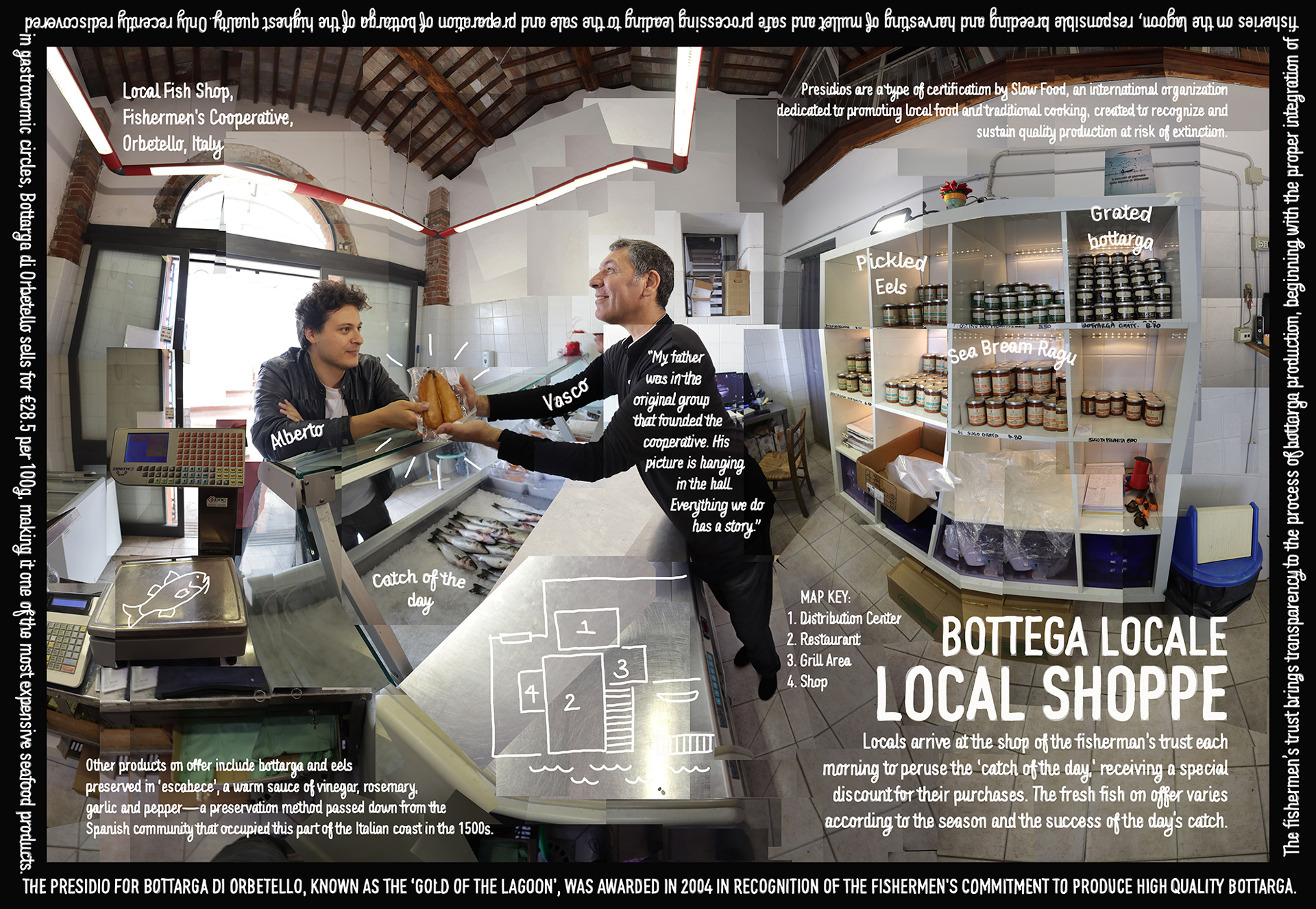
Once cleaned, the fresh roe is carefully salted and moved to the drying chamber—a room with a controlled hot and dry climate. The bottarga is left to cure for at least 30 days before it is portioned and packaged for sale in supermarkets across Italy. Processing the egg sacs of mullet allows for the fishers to transform a raw ingredient into a value-added product that provides a market premium and stimulates the local economy. Bottarga di Orbetello sells for 28 euros per 100 grams, making it one of the most expensive and rare seafood delicacies. Drying and aging the roe also ensures market supply of bottarga all year round, translating to income stability for fishers no matter the season.
As we wrap up our tour of the processing facility, we learn that bottarga di Orbetello is a Slow Food presidio (presidium). Presidios are a type of certification by Slow Food, an international organisation founded in Italy, dedicated to promoting local food and traditional cooking. Presidios seek to recognize and sustain quality production at risk of extinction, protect unique regions and ecosystems, recover traditional processing methods, and safeguard native breeds and local plant varieties.
The Presidio for bottarga di Orbetello was awarded in 2004 in recognition of the fishermen’s unwavering commitment to bring transparency to the process of bottarga production, beginning with the proper integration of fisheries on the lagoon, responsible breeding and harvesting of mullet and safe processing leading to the sale and preparation of bottarga of the highest quality. What I just witnessed at the processing facility is exactly that. It is clear to me how much pride the fishers take in their work and their product, and I am all too aware that this level of transparency is virtually unmatched in the fishing and aquaculture industry.
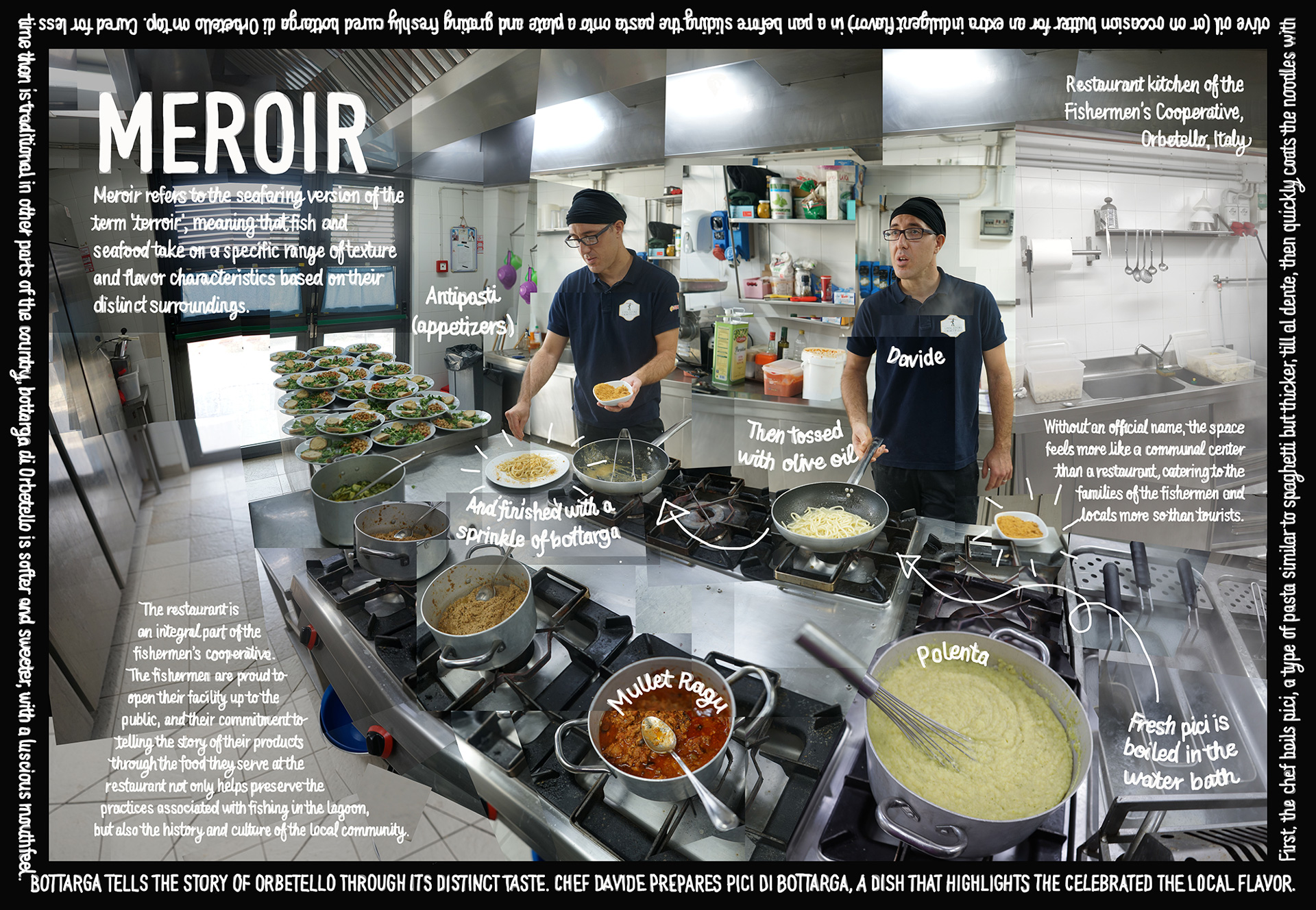
Exhausted but elated from the day’s tour of the processing facility, Alberto, Vito, and I sank gratefully into the chairs of the cooperative’s restaurant. After seeing, touching, and talking about bottarga all day, we are finally ready for the first taste. We order modestly, an appetizer for the table, a couple plates of pici di bottarga as a primo (first course), and a grilled orata (sea bream) as a secondo (second course) to share. Pici di bottarga is the quintessential dish here. The preparation is simple, the flavour divine. To make it, pici, a type of pasta, is boiled until al dente, then quickly coated with olive oil. And presto!, the dish was finished with a generous grating of fresh bottarga.
As I run through the details of the preparation in my head, I think about a new idea I’ve come across in my research, the concept of meroir. Meroir is the seafaring version of the term “terroir,” often used in the wine industry to express the territorial characteristics of wine. Similarly, meroir refers to how fish and seafood take on a specific range of texture and flavor characteristics based on their distinct surroundings. Bottarga di Orbetello tells the story of this unique place through its extraordinary taste. Cured for less time than is traditional in other parts of Italy, bottarga di Orbetello is softer and sweeter, with a luscious mouthfeel.
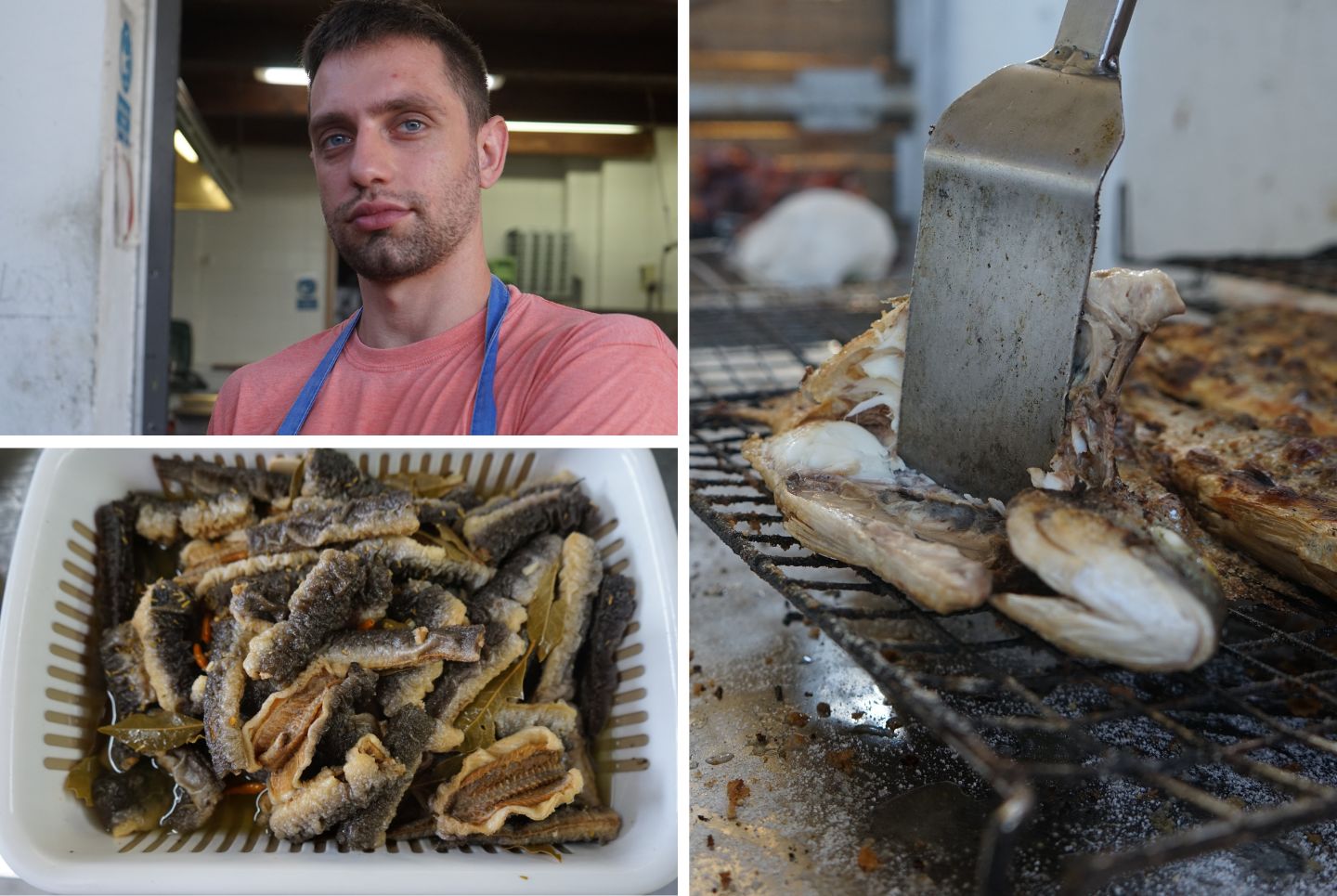
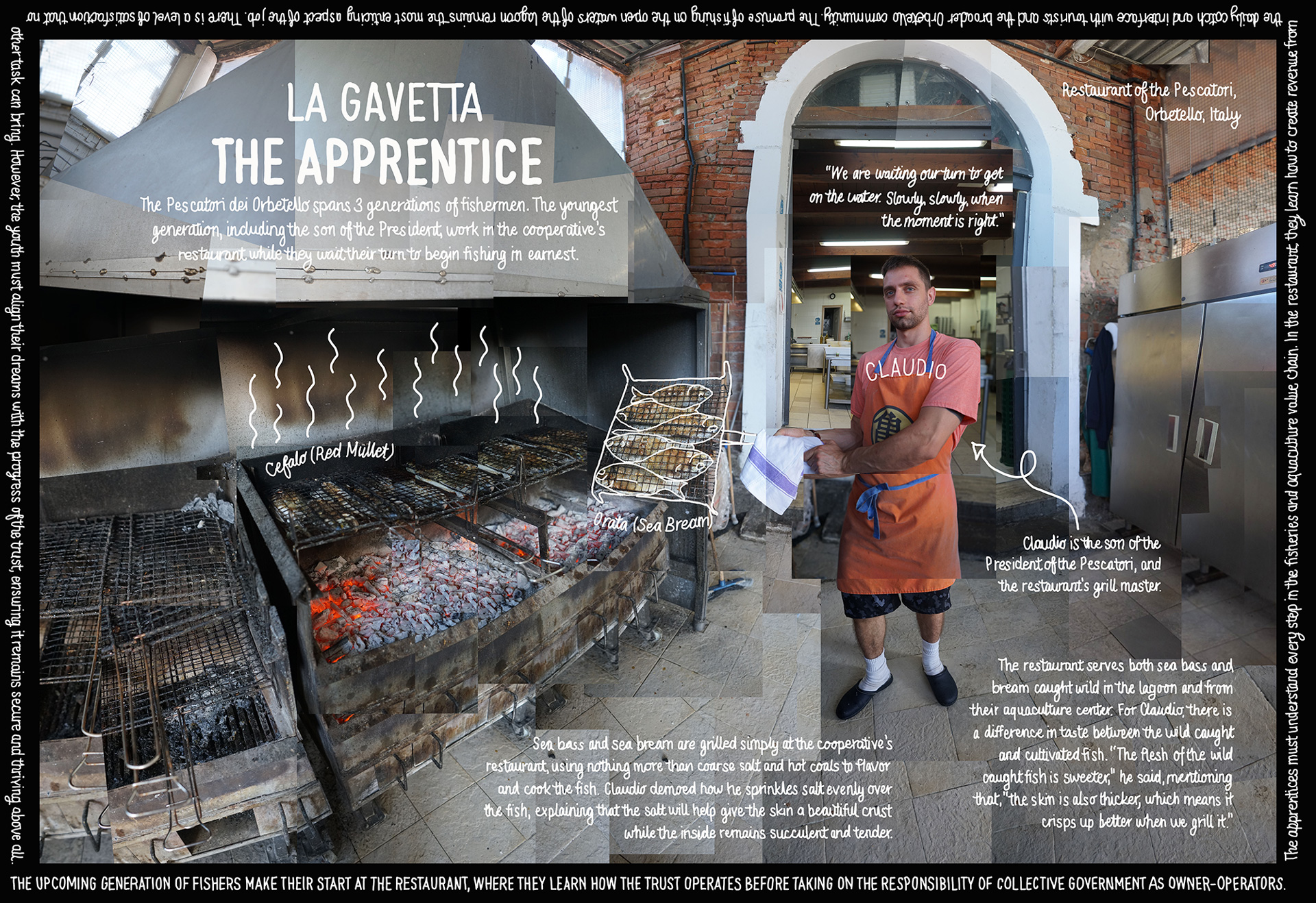
You can taste meroir in the fish served at the restaurant, too. Before sitting down at the table for our meal, we took a tour of the restaurant, making our way through the kitchen and ending in the quasi-outdoor grill area in the back. Here, the grill master Claudio showed us how he grills sea bass and bream simply using coarse sea salt and the smoky char of the coals to flavour the skin. Interestingly, Claudio noted the difference in flavour between the lagoon’s wild-caught and cultivated fish, explaining that the flesh of the wild-caught species is sweeter and thicker, making it ideal for crisping up over the hot flames of the grill.
Claudio is the son of the president of the Pescatori. Working in the restaurant is the first step to becoming an owner/operator of the fishermen’s trust. This way, the upcoming generation sees how the trust operates, learning how to create revenue from the daily catch and interface with tourists before they take on the responsibility of governing, fishing, and collectively running the cooperative.
Back at our table, we are surprised as the kitchen sends out plates after plates of food, almost I think, the entire menu. We have at least three different appetisers: pici di bottarga cooked two ways—one with the traditional olive oil and the other with butter for an impossibly rich flavour; the grilled orata (sea bream); and the cefalo (mullet). We wash it down with a bottle of local wine (in Italy, you can’t do anything otherwise), and I think we even have dessert, although I must admit I no longer quite remember. We cap the meal with espresso and a digestivo, and we go to bed with bellies full.
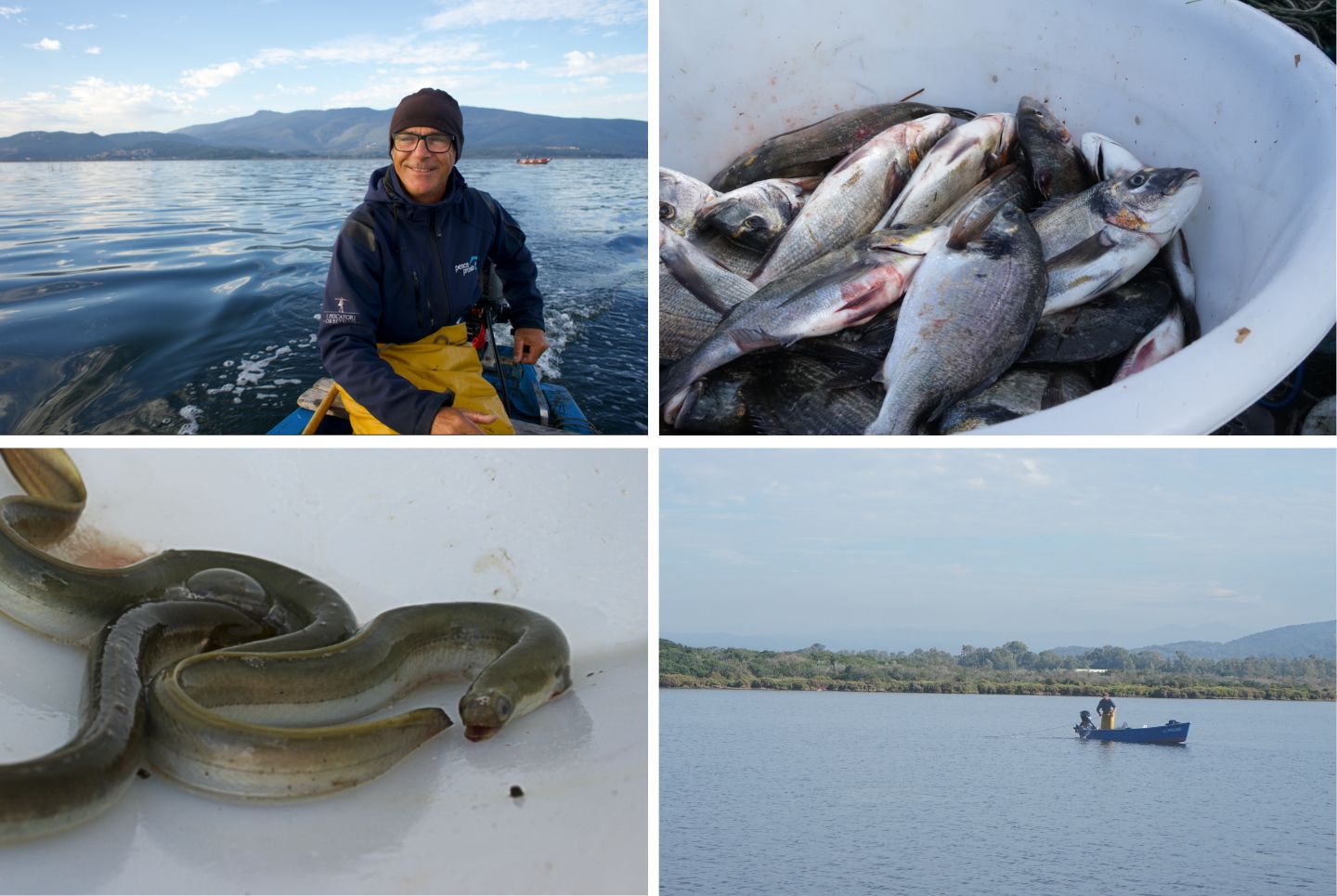
We wake up early the next morning before the sun rises, ready to accompany Marco on his daily journey to haul in the day’s catch. We are quiet as we motor out onto the lagoon, letting the slightly salted air fill our lungs as flecks of water froth up the sides of the boat and hit the exposed parts of our skin, waking us up.
As we slow to a stop, Vito and Marco use long poles to position the boats in front of the fishing nets stretched out as far as the eye can see into the lagoon. Marco begins to pull up the nets, an activity that will take the next hour to complete. I watch, mesmerized, as fish come wriggling out of the water, trapped in the nets. Marco skillfully unties them, throwing them into a bucket of ice water that sits in the middle of the boat, rocking gently. I reach out and touch one of the fish. So this is what it means to catch dinner, I think. Here I am, touching this live fish that I know will end up on my plate later today, transformed from a living creature into food and nourishment for my body.
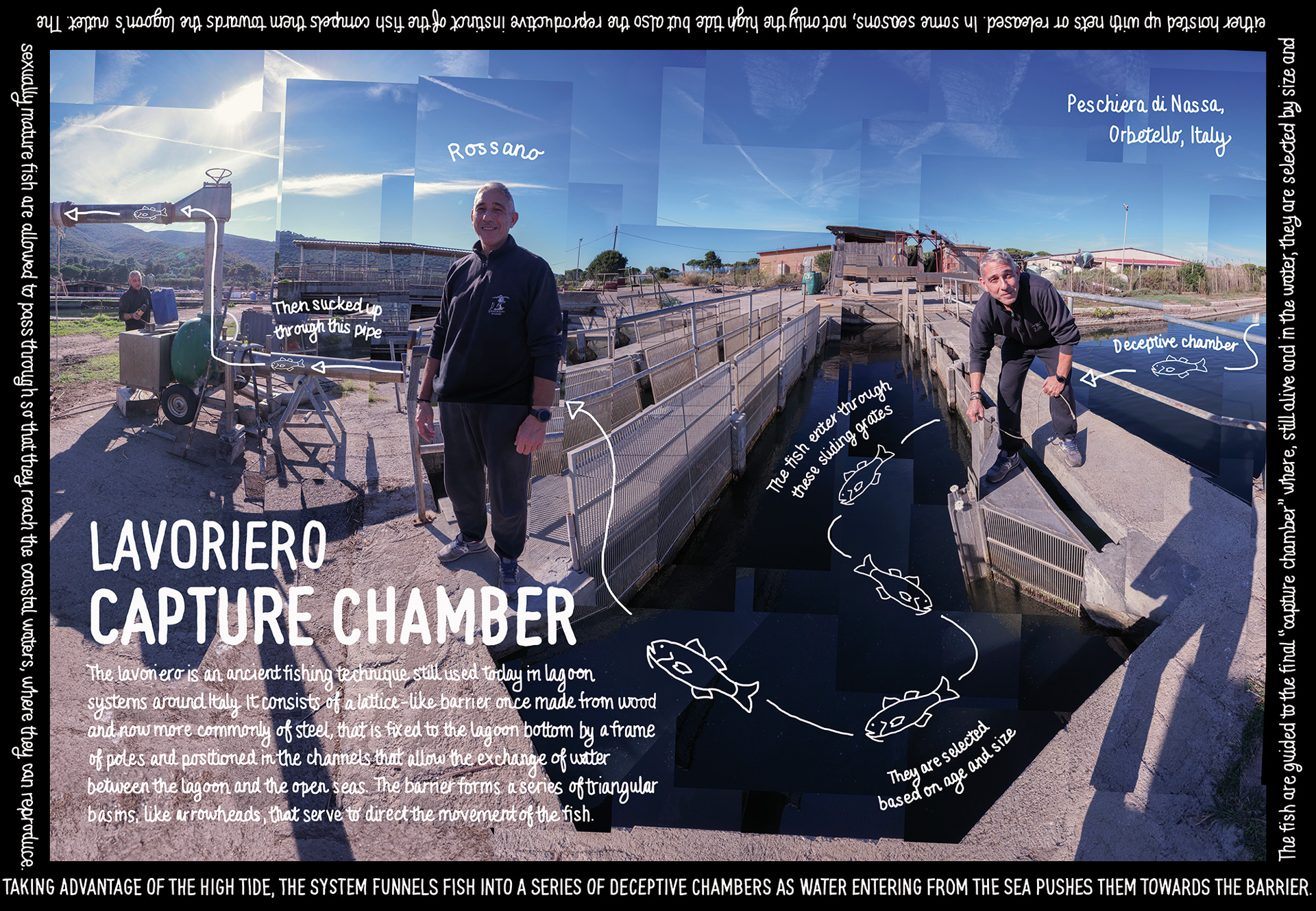
The fishers seem to carry this same sensibility. For them, it translates into a practical approach to preserve, conserve and treat the lagoon and all the species harboured within its waters humanely. This commitment to the natural environment is evident on our tour of the Pescheria di Nassa, the fisheries site of Orbetello, where the fishermen practice extensive rearing.
Unlike intensive rearing, which relegates fish to tanks or small ponds, extensive rearing allows fish to move over large areas and live in semi-wild conditions. Orbetello’s farmed sea bream are reared in net tanks in a circumscribed area, and then released into the lagoon from which they are eventually harvested. This technique ensures the lagoon’s ecosystem remains intact while the fish rely solely on their ability to forage for food in a natural competitive situation to survive and grow to maturity.
The fishers also use ancient fishing tools and techniques, which make use of the natural cycles and behaviors of the fish. One such instrument is the lavoriero, which is a lattice-like barrier that forms a series of triangular chambers, like arrowheads, that serve to direct the movement of the fish as they come in with the high tide. The fish are funneled into a final capture chamber, where they can easily be selected according to size by the fishers and hoisted up out of the water in nets for further processing.
Such a system is in keeping with the ancient rituals of fishing on the lagoon, a testament to the fishers’ commitment to live and work in accordance with the natural environment. I can’t help but think that the fishermen are part of this ecosystem. Just as the sea plants, the mullet, and the flamingos rely on and make up the intricate dance of this lagoon, so too do the fishers of Orbetello, who draw their sustenance from the waters as surely as they pour their care and attention into ensuring its survival for years to come.
When I first heard the fishers’ phrase “Since the mists of time with our hands in the water,” I was immediately drawn to its poetry. Over the course of the days I spent in Orbetello, I discovered that it didn’t just sound pretty. “What does it mean to have your hands in the water, your feet in the water more like, every day of your life?” Vito had asked me while we floated in his boat on the lagoon, watching the colors of the sunset spread over the water like olive oil.
The fishers know the answer to this question—they live the reality. It has been my task to observe, enquire, and uncover the secret simplicity that underlies these words, and eventually now, to share the meaning with you. I have felt the wild, esoteric essence of Orbetello, and I hope that I have transmitted a little of its spirit to you by telling the story of the gold of the lagoon.
Aquatic foods like seaweed, bivalves, and sea breams are rich in protein, minerals, and Omega-3s. Studies link them to better brain and heart health and lower cancer risk. Thanks to innovation and culinary creativity, they’re reaching our tables in ever more delicious ways.
The sum total of all processes in which water moves from the land and ocean surface to the atmosphere and back in form of precipitation.

About
Lexicon of Food is produced by The Lexicon, an international NGO that brings together food companies, government agencies, financial institutions, scientists, entrepreneurs, and food producers from across the globe to tackle some of the most complex challenges facing our food systems.
Team
LexiconLab is an initiative by The Lexicon. It uses stories to celebrate the dedication and diversity of people working to improve the foundational aspects of global food systems. It’s a movement that has the potential to reshape the entire food system and promote healthier ecosystems for a more sustainable future.
This website was built by The Lexicon™, a 501(c)(3) tax-exempt nonprofit organization headquartered in Petaluma, CA.
Check out our Privacy Policy, Cookie Policy, and Terms of Use.
© 2024 – Lexicon of Food™
We have no idea who grows our food, what farming practices they use, the communities they support, or what processing it undergoes before reaching our plates.
As a result, we have no ability to make food purchases that align with our values as individuals, or our missions as companies.
To change that, we’ve asked experts to demystify the complexity of food purchasing so that you can better informed decisions about what you buy.
The Lexicon of Food’s community of experts share their insights and experiences on the complex journey food takes to reach our plates. Their work underscores the need for greater transparency and better informed decision-making in shaping a healthier and more sustainable food system for all.
Professionals at universities and research institutions seeking scholarly articles, data, and resources.
Tools to align investment and grant making strategies with advances in agriculture, food production, and emerging markets.
Professionals seeking information on ingredient sourcing, menu planning, sustainability, and industry trends.
Chefs and food industry professionals seeking inspiration on ingredients and sustainable trends to enhance their work.
Individuals interested in food products, recipes, nutrition, and health-related information for personal or family use.
Individuals producing food, fiber, feed, and other agricultural products that support both local and global food systems.
This online platform is years in the making, featuring the contributions of 1000+ companies and NGOs across a dzen domain areas. To introduce you to their work, we’ve assembled personalized experiences with insights from our community of international experts.
Businesses engaged in food production, processing, and distribution that seek insight from domain experts
Those offering specialized resources and support and guidance in agriculture, food production, and nutrition.
Individuals who engage and educate audience on themes related to agriculture, food production, and nutrition.
Nutritional information for professionals offering informed dietary choices that help others reach their health objectives
Those advocating for greater awareness and stronger action to address climate impacts on agriculture and food security.
Professionals seeking curriculum materials, lesson plans, and learning tools related to food and agriculture.
Over half the world’s agricultural production comes from only three crops. Can we bring greater diversity to our plates?
In the US, four companies control nearly 85% of the beef we consume. Can we develop more regionally-based markets?
How can we develop alternatives to single-use plastics that are more sustainable and environmentally friendly?
Could changing the way we grow our food provide benefits for people and the planet, and even respond to climate change?
Can we meet the growing global demand for protein while reducing our reliance on traditional animal agriculture?
It’s not only important what we eat but what our food comes in. Can we develop tools that identify toxic materials used in food packaging?
Explore The Lexicon’s collection of immersive storytelling experiences featuring insights from our community of international experts.
The Great Protein Shift
Our experts use an engaging interactive approach to break down the technologies used to create these novel proteins.
Lexicon of Impacts
Accelerate positive impacts building a common language for investors, communities and project developers to activate catalytic capital for our planet.
Food-related chronic diseases are the biggest burden on healthcare systems. What would happen if we treated food as medicine?
How can we responsibly manage our ocean fisheries so there’s enough seafood for everyone now and for generations to come?
Mobilizing agronomists, farmers, NGOs, chefs, and food companies in defense of biodiversity in nature, agriculture, and on our plates.
Can governments develop guidelines that shift consumer diets, promote balanced nutrition and reduce the risk of chronic disease?
Will sustainably raising shellfish, finfish, shrimp and algae meet the growing demand for seafood while reducing pressure on wild fisheries?
How can a universal visual language to describe our food systems bridge cultural barriers and increase consumer literacy?
What if making the right food choices could be an effective tool for addressing a range of global challenges?
Let’s start with climate change. While it presents our planet with existential challenges, biodiversity loss, desertification, and water scarcity should be of equal concern—they’re all connected.
Instead of seeking singular solutions, we must develop a holistic approach, one that channel our collective energies and achieve positive impacts where they matter most.
To maximize our collective impact, EBF can help consumers focus on six equally important ecological benefits: air, water, soil, biodiversity, equity, and carbon.
We’ve gathered domain experts from over 1,000 companies and organizations working at the intersection of food, agriculture, conservation, and climate change.
The Lexicon™ is a California-based nonprofit founded in 2009 with a focus on positive solutions for a more sustainable planet.
For the past five years, it has developed an “activator for good ideas” with support from Food at Google. This model gathers domain experts from over 1,000 companies and organizations working at the intersection of food, agriculture, conservation, and climate change.
Together, the community has reached consensus on strategies that respond to challenges across multiple domain areas, including biodiversity, regenerative agriculture, food packaging, aquaculture, and the missing middle in supply chains for meat.
Lexicon of Food is the first public release of that work.
Over half the world’s agricultural production comes from only three crops. Can we bring greater diversity to our plates?
In the US, four companies control nearly 85% of the beef we consume. Can we develop more regionally-based markets?
How can we develop alternatives to single-use plastics that are more sustainable and environmentally friendly?
Could changing the way we grow our food provide benefits for people and the planet, and even respond to climate change?
Can we meet the growing global demand for protein while reducing our reliance on traditional animal agriculture?
It’s not only important what we eat but what our food comes in. Can we develop tools that identify toxic materials used in food packaging?
Explore The Lexicon’s collection of immersive storytelling experiences featuring insights from our community of international experts.
The Great Protein Shift
Our experts use an engaging interactive approach to break down the technologies used to create these novel proteins.
Ten Principles for Regenerative Agriculture
What is regenerative agriculture? We’ve developed a framework to explain the principles, practices, ecological benefits and language of regenerative agriculture, then connected them to the UN’s Sustainable Development Goals.
Food-related chronic diseases are the biggest burden on healthcare systems. What would happen if we treated food as medicine?
How can we responsibly manage our ocean fisheries so there’s enough seafood for everyone now and for generations to come?
Mobilizing agronomists, farmers, NGOs, chefs, and food companies in defense of biodiversity in nature, agriculture, and on our plates.
Can governments develop guidelines that shift consumer diets, promote balanced nutrition and reduce the risk of chronic disease?
Will sustainably raising shellfish, finfish, shrimp and algae meet the growing demand for seafood while reducing pressure on wild fisheries?
How can a universal visual language to describe our food systems bridge cultural barriers and increase consumer literacy?
This game was designed to raise awareness about the impacts our food choices have on our own health, but also the environment, climate change and the cultures in which we live.
First, you can choose one of the four global regions and pick a character that you want to play.
Each region has distinct cultural, economic, historical, and agricultural capacities to feed itself, and each character faces different challenges, such as varied access to food, higher or lower family income, and food literacy.
As you take your character through their day, select the choices you think they might make given their situation.
At the end of the day you will get a report on the impact of your food choices on five areas: health, healthcare, climate, environment and culture. Take some time to read through them. Now go back and try again. Can you make improvements in all five areas? Did one area score higher, but another score lower?
FOOD CHOICES FOR A HEALTHY PLANET will help you better understand how all these regions and characters’ particularities can influence our food choices, and how our food choices can impact our personal health, national healthcare, environment, climate, and culture. Let’s Play!
The FOOD CHOICES FOR A HEALTHY PLANET game allows users to experience the dramatic connections between food and climate in a unique and engaging way. The venue and the game set-up provides attendees with a fun experience, with a potential to add a new layer of storytelling about this topic.
Starting the game: the pilot version of the game features four country/regions: Each reflects a different way people (and the national dietary guidelines) look at diets: Nordic Countries (sustainability), Brazil (local and whole foods instead of ultra-processed foods); Canada (plant-forward), and Indonesia (developing countries).
Personalizing the game: players begin by choosing a country and then a character who they help in making food choices over the course of one day. Later versions may allow for creating custom avatars.
Making tough food choices: This interactive game for all ages shows how the food choices we make impact our health and the environment, and even contribute to climate change.


What we eat matters: at the end of each game, players learn that every decision they make impacts not only their health, but a national healthcare system, the environment, climate and even culture.
We’d love to know more about you and why you think you will be a great fit for this position! Shoot us an email introducing you and we’ll get back to you as soon as possible!
Providing best water quality conditions to ensure optimal living condition for growth, breeding and other physiological needs
Water quality is sourced from natural seawater with dependency on the tidal system. Water is treated to adjust pH and alkalinity before stocking.
Producers that own and manages the farm operating under small-scale farming model with limited input, investment which leads to low to medium production yield
All 1,149 of our farmers in both regencies are smallholder farmers who operate with low stocking density, traditional ponds, and no use of any other intensification technology.
Safe working conditions — cleanliness, lighting, equipment, paid overtime, hazard safety, etc. — happen when businesses conduct workplace safety audits and invest in the wellbeing of their employees
Company ensure implementation of safe working conditions by applying representative of workers to health and safety and conduct regular health and safety training. The practices are proven by ASIC standards’ implementation
Implementation of farming operations, management and trading that impact positively to community wellbeing and sustainable better way of living
The company works with local stakeholders and local governments to create support for farmers and the farming community in increasing resilience. Our farming community is empowered by local stakeholders continuously to maintain a long generation of farmers.
Freezing seafood rapidly when it is at peak freshness to ensure a higher quality and longer lasting product
Our harvests are immediately frozen with ice flakes in layers in cool boxes. Boxes are equipped with paper records and coding for traceability. We ensure that our harvests are processed with the utmost care at <-18 degrees Celsius.
Sourcing plant based ingredients, like soy, from producers that do not destroy forests to increase their growing area and produce fish feed ingredients
With adjacent locations to mangroves and coastal areas, our farmers and company are committed to no deforestation at any scale. Mangrove rehabilitation and replantation are conducted every year in collaboration with local authorities. Our farms are not established in protected habitats and have not resulted from deforestation activity since the beginning of our establishment.
Implement only natural feeds grown in water for aquatic animal’s feed without use of commercial feed
Our black tiger shrimps are not fed using commercial feed. The system is zero input and depends fully on natural feed grown in the pond. Our farmers use organic fertilizer and probiotics to enhance the water quality.
Enhance biodiversity through integration of nature conservation and food production without negative impact to surrounding ecosysytem
As our practices are natural, organic, and zero input, farms coexist with surrounding biodiversity which increases the volume of polyculture and mangrove coverage area. Farmers’ groups, along with the company, conduct regular benthic assessments, river cleaning, and mangrove planting.
THE TERM “MOONSHOT” IS OFTEN USED TO DESCRIBE an initiative that goes beyond the confines of the present by transforming our greatest aspirations into reality, but the story of a moonshot isn’t that of a single rocket. In fact, the Apollo program that put Neil Armstrong on the moon was actually preceded by the Gemini program, which in a two-year span rapidly put ten rockets into space. This “accelerated” process — with a new mission nearly every 2-3 months — allowed NASA to rapidly iterate, validate their findings and learn from their mistakes. Telemetry. Propulsion. Re-entry. Each mission helped NASA build and test a new piece of the puzzle.
The program also had its fair share of creative challenges, especially at the outset, as the urgency of the task at hand required that the roadmap for getting to the moon be written in parallel with the rapid pace of Gemini missions. Through it all, the NASA teams never lost sight of their ultimate goal, and the teams finally aligned on their shared responsibilities. Within three years of Gemini’s conclusion, a man did walk on the moon.
FACT is a food systems solutions activator that assesses the current food landscape, engages with key influencers, identifies trends, surveys innovative work and creates greater visibility for ideas and practices with the potential to shift key food and agricultural paradigms.
Each activator focuses on a single moonshot; instead of producing white papers, policy briefs or peer-reviewed articles, these teams design and implement blueprints for action. At the end of each activator, their work is released to the public and open-sourced.
As with any rapid iteration process, many of our activators re-assess their initial plans and pivot to address new challenges along the way. Still, one thing has remained constant: their conviction that by working together and pooling their knowledge and resources, they can create a multiplier effect to more rapidly activate change.
Co-Founder
THE LEXICON
Vice President
Global Workplace Programs
GOOGLE
Who can enter and how selections are made.
A Greener Blue is a global call to action that is open to individuals and teams from all over the world. Below is a non-exhaustive list of subjects the initiative targets.
To apply, prospective participants will need to fill out the form on the website, by filling out each part of it. Applications left incomplete or containing information that is not complete enough will receive a low score and have less chance of being admitted to the storytelling lab.
Nonprofit organizations, communities of fishers and fish farmers and companies that are seeking a closer partnership or special support can also apply by contacting hello@thelexicon.org and interacting with the members of our team.
Special attention will be given to the section of the form regarding the stories that the applicants want to tell and the reasons for participating. All proposals for stories regarding small-scale or artisanal fishers or aquaculturists, communities of artisanal fishers or aquaculturists, and workers in different steps of the seafood value chain will be considered.
Stories should show the important role that these figures play in building a more sustainable seafood system. To help with this narrative, the initiative has identified 10 principles that define a more sustainable seafood system. These can be viewed on the initiative’s website and they state:
Seafood is sustainable when:
Proposed stories should show one or more of these principles in practice.
Applications are open from the 28th of June to the 15th of August 2022. There will be 50 selected applicants who will be granted access to The Lexicon’s Total Storytelling Lab. These 50 applicants will be asked to accept and sign a learning agreement and acceptance of participation document with which they agree to respect The Lexicon’s code of conduct.
The first part of the lab will take place online between August the 22nd and August the 26th and focus on training participants on the foundation of storytelling, supporting them to create a production plan, and aligning all of them around a shared vision.
Based on their motivation, quality of the story, geography, and participation in the online Lab, a selected group of participants will be gifted a GoPro camera offered to the program by GoPro For A Change. Participants who are selected to receive the GoPro camera will need to sign an acceptance and usage agreement.
The second part of the Storytelling Lab will consist of a production period in which each participant will be supported in the production of their own story. This period goes from August 26th to October 13th. Each participant will have the opportunity to access special mentorship from an international network of storytellers and seafood experts who will help them build their story. The Lexicon also provides editors, animators, and graphic designers to support participants with more technical skills.
The final deadline to submit the stories is the 14th of October. Participants will be able to both submit complete edited stories, or footage accompanied by a storyboard to be assembled by The Lexicon’s team.
All applicants who will exhibit conduct and behavior that is contrary to The Lexicon’s code of conduct will be automatically disqualified. This includes applicants proposing stories that openly discriminate against a social or ethnic group, advocate for a political group, incite violence against any group, or incite to commit crimes of any kind.
All submissions must be the entrant’s original work. Submissions must not infringe upon the trademark, copyright, moral rights, intellectual rights, or rights of privacy of any entity or person.
Participants will retain the copyrights to their work while also granting access to The Lexicon and the other partners of the initiative to share their contributions as part of A Greener Blue Global Storytelling Initiative.
If a potential selected applicant cannot be reached by the team of the Initiative within three (3) working days, using the contact information provided at the time of entry, or if the communication is returned as undeliverable, that potential participant shall forfeit.
Selected applicants will be granted access to an advanced Storytelling Lab taught and facilitated by Douglas Gayeton, award-winning storyteller and information architect, co-founder of The Lexicon. In this course, participants will learn new techniques that will improve their storytelling skills and be able to better communicate their work with a global audience. This skill includes (but is not limited to) how to build a production plan for a documentary, how to find and interact with subjects, and how to shoot a short documentary.
Twenty of the participants will receive a GoPro Hero 11 Digital Video and Audio Cameras by September 15, 2022. Additional participants may receive GoPro Digital Video and Audio Cameras to be announced at a later date. The recipients will be selected by advisors to the program and will be based on selection criteria (see below) on proposals by Storytelling Lab participants. The selections will keep in accordance with Lab criteria concerning geography, active participation in the Storytelling Lab and commitment to the creation of a story for the Initiative, a GoPro Camera to use to complete the storytelling lab and document their story. These recipients will be asked to sign an acceptance letter with terms of use and condition to receive the camera.
The Lexicon provides video editors, graphic designers, and animators to support the participants to complete their stories.
The submitted stories will be showcased during international and local events, starting from the closing event of the International Year of Fisheries and Aquaculture 2022 in Rome, in January 2023. The authors of the stories will be credited and may be invited to join.
Storytelling lab participation:
Applicants that will be granted access to the storytelling Lab will be evaluated based on the entries they provided in the online form, and in particular:
Applications will be evaluated by a team of 4 judges from The Lexicon, GSSI and the team of IYAFA (Selection committee).
When selecting applications, the call promoters may request additional documentation or interviews both for the purpose of verifying compliance with eligibility requirements and to facilitate proposal evaluation.
Camera recipients:
Participants to the Storytelling Lab who will be given a GoPro camera will be selected based on:
The evaluation will be carried out by a team of 4 judges from The Lexicon, GSSI and the team of IYAFA (Selection committee).
Incidental expenses and all other costs and expenses which are not specifically listed in these Official Rules but which may be associated with the acceptance, receipt and use of the Storytelling Lab and the camera are solely the responsibility of the respective participants and are not covered by The Lexicon or any of the A Greener Blue partners.
All participants who receive a Camera are required to sign an agreement allowing GoPro for a Cause, The Lexicon and GSSI to utilize the films for A Greener Blue and their promotional purposes. All participants will be required to an agreement to upload their footage into the shared drive of The Lexicon and make the stories, films and images available for The Lexicon and the promoting partners of A Greener Blue.