When Melissa Moody, 27, was made redundant from her office job at the start of the Covid pandemic, nothing about her lifestyle indicated she'd become an organic dairy farm smallholder just two years later.
After she took a temporary job on a farm in upstate New York, she milked a cow for the first time in her life. Now Melissa is looking after a herd of about 40 dairy cows by herself.
“Besides dogs growing up and hamsters, I had never been on a farm before,” said Moody. The first thing she said to her farming mentor was “I hope you don’t expect me to milk these cows” because she was scared they were “huge”. But she was excited about feeding and taking care of the calves who she found “adorable” and “spunky”.
Many farmers are searching for a trusted person they can pass their farm and animals on to later in life. When her mentor decided it was time to retire, he gave Moody the opportunity to take over the farm.
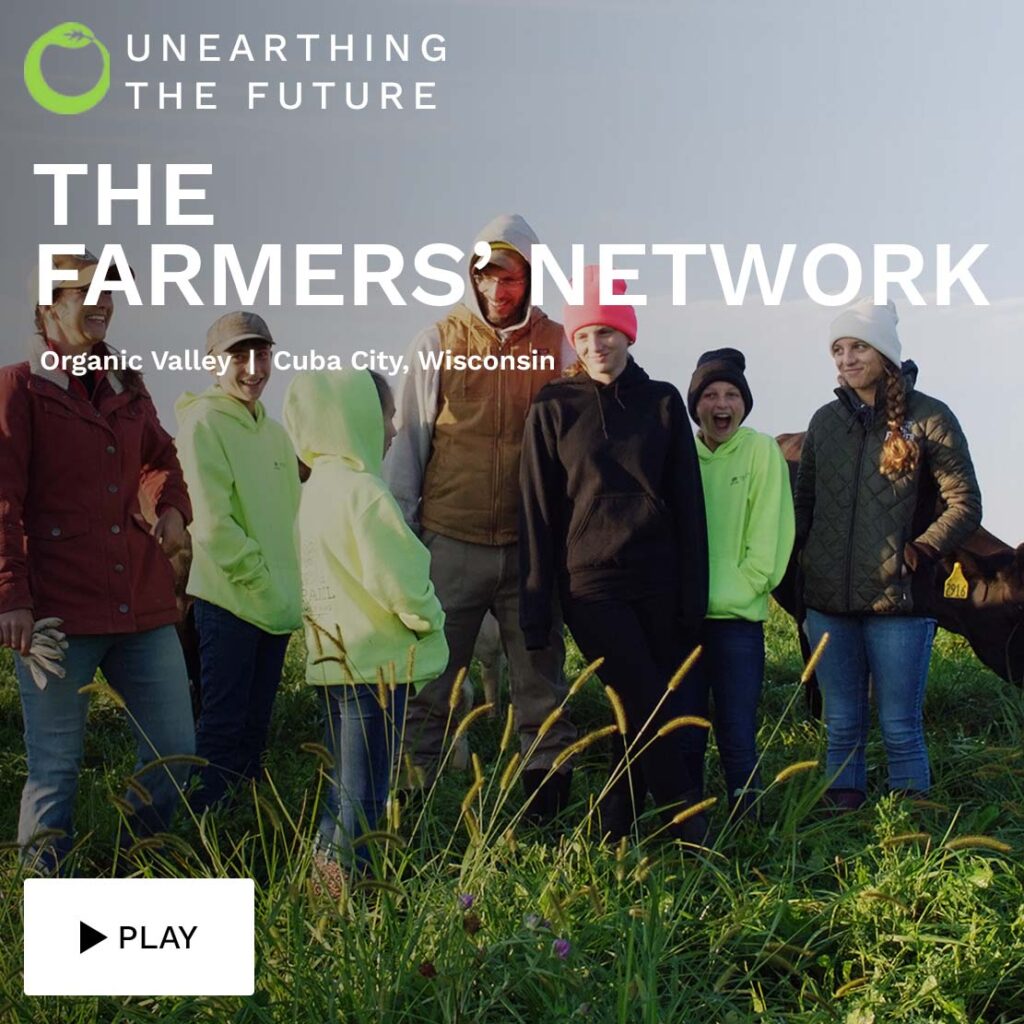
Lacking experience, she found both community and guidance through organic farmers around her – the previous owner, her first employer and a network of peers, staff and veterinarians from the cooperative her farm was an existing member of.
The co-op she joined, CROPP Cooperative, also known by the brand name Organic Valley, functions at the intersection of community-building and marketing farmers’ products. It was established in 1988 as a farmer-owned collective looking to compete with industrial agriculture, and today it has grown to be a more than $1bn company marketing the organic dairy products of 1,400 organic member farms across 29 states. Throughout this growth, one thing has remained constant – it has remained a farmer-owned cooperative.
Organic Valley has noticed a new demographic of Americans who are attracted to the more ethical and more sustainable take on farming that organic practices offer. The average age of US farmers is 58 and rising. Dairy farmers average 51 years, but Organic Valley ones are four years younger than that on average.
The average age of U.S. farmers is58and rising
I don't know that I would be able to sit inside at a computer all day after being able to go outside and enjoy the weather and all those cows and chickens
For Moody, there is no going back to the office. “I just really like being outside with the animals,” she said. “I don’t know that I would be able to sit inside at a computer all day after being able to go outside and enjoy the weather and all those cows and chickens.”
But she would only do it as long as it’s organic, having only ever known “And it doesn’t sit well with me – animals being inside all the time, I enjoy having them be able to be outside in the natural elements.”
Meanwhile in Oregon, 36-year-old Organic Valley farmer Ross Bansen has recently taken over from his parents Jon and Juli. Born and raised on a farm, he once questioned whether there was more to life beyond it but leaving for college made him realise how deeply he valued the connection to the “There is more power to know you’re affecting people’s lives in a positive manner than anything else I could have thought of in college,” he said.
Today, Bansen’s cows graze from March to November, moving freely across pastures in ways larger operations are not set up for. “When you get in a corporatised mindset, you forget about the small creatures and the birds and the animals, because you’re just out there to return profit for your shareholders.”
After work experience in Australia and New Zealand, Bansen began planting hedgerows and tree rows through the pastures – a practice known as silvopasture, which he says, “modern agriculture calls a waste of space”. Bansen, however, sees it as potential – for bringing birds back, giving cows shade on hot days and feeding them apples, nuts and tree leaves.
Now working with Oregon State University, Bansen is experimenting with forages that may reduce methane emissions. Bansen’s goal is to reclaim a kind of farming that constantly learns from nature over relying on what he sees as “the lotions and potions of corporate agriculture”.
Economic and climate pressures
The number of farmers in the US dropped
From 2.04 million in 2017 to 1.9 million in 2022. a loss of about 141,700 farms, or 7%, in five years, according to the USDA’s 2022 Census of Agriculture.
Organic farmers are hit even harder despite organic demand remaining strong. Between 2019 and 2021, certified organic pastureland declined 36% to 1.3 million acres and land transitioning to organic dropped as well, according to the 2021 Organic Survey by the National Agricultural Statistics Service.
Last year, US organic dairy producers faced unique challenges including volatile prices for organic feed, exacerbated by drought in major forage-producing regions and disruptions of organic feed imports from Ukraine, according to a recent USDA analysis.
The co-op also provides access to on-farm advice and offers a stable pay price. It was recently increased to offset inflation, rising land costs and climate impacts, and to ensure small organic farms remain attractive rather than folding or converting to conventional production.
Many younger people in Organic Valley farm families are keen to take over the dairy, but they want to do it differently, said Jessica Luhning, Organic Valley’s interim director of sustainability. They want to modernise facilities, reduce labour inefficiencies, they are interested in installing renewable energy sources and planting trees, and the co-op’s role is to help make that vision possible, she said.
A recent carbon insetting programme at the co-op, aimed at incentivising members to reduce their emissions through verifiable, more sustainable practices, has seen more than 100 enrolments since the start of the programme in 2022. Suggested climate action practices span solar energy, composting manure, which emits less greenhouse gases in a dry form, and – most popular of all, says Luhning – planting trees inside pasture, dedicated areas and along waterways.
Many farmers are new to “climate-smart ag” but in the organic world many of the practices come naturally. “I just wanted fresh fruit and vegetables, I wanted my flower beds to look nice,” said Moody, adding it has an added benefit to the pollinators and it’s more sustainable. She continues maintaining silvopasture that the previous farm owner set up and a separate forest area on her land.
The co-op works with its partners across the whole value chain – manufacturers, distributors and retailers – to co-invest in on-farm practices, allowing all actors to credibly claim progress towards their own climate goals.
Yearly third-party validation of all the programme’s processes is important to safeguard against greenwashing. “What you’ll see in this space is a lot of narrative claims made by companies that don’t really have a lot behind them,” said Luhning. “And so we’re trying to be the alternative to that and bring credibility to the space.”
“Even though we’re small, we’re mighty,” Luhning said. “We’ve been a pioneering leader in dairy since 1988 so people are paying attention to what we’re doing and how we’re leading in this space.” She has seen large conventional dairy companies model the work Organic Valley does within their own business, she said.
Back in Oregon, Bansen is hopeful about organic farming thriving when community members support each other. “We have all walks of life in our co-op, all kinds of religious, political affiliations, but I think that makes us stronger – we have the same goal and a solid mission,” he said. “That is so important because diversity drives resilience and health – I see that on the level of nature I deal with on the farm but also on the human level.”
Advertisement feature presented by
Six stories on how food defines human life by shaping where we gather, what we value, and how we live.
A commercial production by
Explore our film series
Take a look at other films produced by Lexicon of Food™.
This website uses cookies to improve your experience while you navigate through the website. Out of these cookies, the cookies that are categorized as necessary are stored on your browser as they are essential for the working of basic functionalities of the website. We also use third-party cookies that help us analyze and understand how you use this website. These cookies will be stored in your browser only with your consent. You also have the option to opt-out of these cookies. But opting out of some of these cookies may have an effect on your browsing experience.
Necessary cookies are absolutely essential for the website to function properly. This category only includes cookies that ensures basic functionalities and security features of the website. These cookies do not store any personal information.
Any cookies that may not be particularly necessary for the website to function and is used specifically to collect user personal data via analytics, ads, other embedded contents are termed as non-necessary cookies. It is mandatory to procure user consent prior to running these cookies on your website.
Contact
Please share your comments and questions and get a response from a real person!
Connected Market Tools
We have no idea who grows our food, what farming practices they use, the communities they support, or what processing it undergoes before reaching our plates.
As a result, we have no ability to make food purchases that align with our values as individuals, or our missions as companies.
To change that, we’ve asked experts to demystify the complexity of food purchasing so that you can better informed decisions about what you buy.
Explainers
The Lexicon of Food’s community of experts share their insights and experiences on the complex journey food takes to reach our plates. Their work underscores the need for greater transparency and better informed decision-making in shaping a healthier and more sustainable food system for all.
Tell us who you are and we'll take you on a curated journey through Lexicon of Food.
This online platform is years in the making, featuring the contributions of 1000+ companies and NGOs across a dzen domain areas. To introduce you to their work, we’ve assembled personalized experiences with insights from our community of international experts.
What if making the right food choices could be an effective tool for addressing a range of global challenges?
Let’s start with climate change. While it presents our planet with existential challenges, biodiversity loss, desertification, and water scarcity should be of equal concern—they’re all connected.
Instead of seeking singular solutions, we must develop a holistic approach, one that channel our collective energies and achieve positive impacts where they matter most.
To maximize our collective impact, EBF can help consumers focus on six equally important ecological benefits: air, water, soil, biodiversity, equity, and carbon.
We’ve gathered domain experts from over 1,000 companies and organizations working at the intersection of food, agriculture, conservation, and climate change.
The Lexicon™ is a California-based nonprofit founded in 2009 with a focus on positive solutions for a more sustainable planet.
For the past five years, it has developed an “activator for good ideas” with support from Food at Google. This model gathers domain experts from over 1,000 companies and organizations working at the intersection of food, agriculture, conservation, and climate change.
Together, the community has reached consensus on strategies that respond to challenges across multiple domain areas, including biodiversity, regenerative agriculture, food packaging, aquaculture, and the missing middle in supply chains for meat.
Lexicon of Food is the first public release of that work.
Welcome to the “FOOD CHOICES FOR A HEALTHY PLANET” game!
This game was designed to raise awareness about the impacts our food choices have on our own health, but also the environment, climate change and the cultures in which we live.
First, you can choose one of the four global regions and pick a character that you want to play.
Each region has distinct cultural, economic, historical, and agricultural capacities to feed itself, and each character faces different challenges, such as varied access to food, higher or lower family income, and food literacy.
As you take your character through their day, select the choices you think they might make given their situation.
At the end of the day you will get a report on the impact of your food choices on five areas: health, healthcare, climate, environment and culture. Take some time to read through them. Now go back and try again. Can you make improvements in all five areas? Did one area score higher, but another score lower?
FOOD CHOICES FOR A HEALTHY PLANET will help you better understand how all these regions and characters’ particularities can influence our food choices, and how our food choices can impact our personal health, national healthcare, environment, climate, and culture. Let’s Play!
The FOOD CHOICES FOR A HEALTHY PLANET game allows users to experience the dramatic connections between food and climate in a unique and engaging way. The venue and the game set-up provides attendees with a fun experience, with a potential to add a new layer of storytelling about this topic.
Starting the game: the pilot version of the game features four country/regions: Each reflects a different way people (and the national dietary guidelines) look at diets: Nordic Countries (sustainability), Brazil (local and whole foods instead of ultra-processed foods); Canada (plant-forward), and Indonesia (developing countries).
Personalizing the game: players begin by choosing a country and then a character who they help in making food choices over the course of one day. Later versions may allow for creating custom avatars.
Making tough food choices: This interactive game for all ages shows how the food choices we make impact our health and the environment, and even contribute to climate change.
What we eat matters: at the end of each game, players learn that every decision they make impacts not only their health, but a national healthcare system, the environment, climate and even culture.
A Cooperative Approach
Application
We’d love to know more about you and why you think you will be a great fit for this position! Shoot us an email introducing you and we’ll get back to you as soon as possible!
Water Quality
Providing best water quality conditions to ensure optimal living condition for growth, breeding and other physiological needs
Water quality is sourced from natural seawater with dependency on the tidal system. Water is treated to adjust pH and alkalinity before stocking.
Producers that own and manages the farm operating under small-scale farming model with limited input, investment which leads to low to medium production yield
All 1,149 of our farmers in both regencies are smallholder farmers who operate with low stocking density, traditional ponds, and no use of any other intensification technology.
Safe working conditions — cleanliness, lighting, equipment, paid overtime, hazard safety, etc. — happen when businesses conduct workplace safety audits and invest in the wellbeing of their employees
Company ensure implementation of safe working conditions by applying representative of workers to health and safety and conduct regular health and safety training. The practices are proven by ASIC standards’ implementation
Implementation of farming operations, management and trading that impact positively to community wellbeing and sustainable better way of living
The company works with local stakeholders and local governments to create support for farmers and the farming community in increasing resilience. Our farming community is empowered by local stakeholders continuously to maintain a long generation of farmers.
Freezing seafood rapidly when it is at peak freshness to ensure a higher quality and longer lasting product
Our harvests are immediately frozen with ice flakes in layers in cool boxes. Boxes are equipped with paper records and coding for traceability. We ensure that our harvests are processed with the utmost care at <-18 degrees Celsius.
Sourcing plant based ingredients, like soy, from producers that do not destroy forests to increase their growing area and produce fish feed ingredients
With adjacent locations to mangroves and coastal areas, our farmers and company are committed to no deforestation at any scale. Mangrove rehabilitation and replantation are conducted every year in collaboration with local authorities. Our farms are not established in protected habitats and have not resulted from deforestation activity since the beginning of our establishment.
Implement only natural feeds grown in water for aquatic animal’s feed without use of commercial feed
Our black tiger shrimps are not fed using commercial feed. The system is zero input and depends fully on natural feed grown in the pond. Our farmers use organic fertilizer and probiotics to enhance the water quality.
Enhance biodiversity through integration of nature conservation and food production without negative impact to surrounding ecosysytem
As our practices are natural, organic, and zero input, farms coexist with surrounding biodiversity which increases the volume of polyculture and mangrove coverage area. Farmers’ groups, along with the company, conduct regular benthic assessments, river cleaning, and mangrove planting.
THE TERM “MOONSHOT” IS OFTEN USED TO DESCRIBE an initiative that goes beyond the confines of the present by transforming our greatest aspirations into reality, but the story of a moonshot isn’t that of a single rocket. In fact, the Apollo program that put Neil Armstrong on the moon was actually preceded by the Gemini program, which in a two-year span rapidly put ten rockets into space. This “accelerated” process — with a new mission nearly every 2-3 months — allowed NASA to rapidly iterate, validate their findings and learn from their mistakes. Telemetry. Propulsion. Re-entry. Each mission helped NASA build and test a new piece of the puzzle.
The program also had its fair share of creative challenges, especially at the outset, as the urgency of the task at hand required that the roadmap for getting to the moon be written in parallel with the rapid pace of Gemini missions. Through it all, the NASA teams never lost sight of their ultimate goal, and the teams finally aligned on their shared responsibilities. Within three years of Gemini’s conclusion, a man did walk on the moon.
FACT is a food systems solutions activator that assesses the current food landscape, engages with key influencers, identifies trends, surveys innovative work and creates greater visibility for ideas and practices with the potential to shift key food and agricultural paradigms.
Each activator focuses on a single moonshot; instead of producing white papers, policy briefs or peer-reviewed articles, these teams design and implement blueprints for action. At the end of each activator, their work is released to the public and open-sourced.
As with any rapid iteration process, many of our activators re-assess their initial plans and pivot to address new challenges along the way. Still, one thing has remained constant: their conviction that by working together and pooling their knowledge and resources, they can create a multiplier effect to more rapidly activate change.
A Greener Blue Global Storytelling Initiative is sponsored by The Lexicon, a US based 501(c)(3) public charity.
Opportunity
Storytellers will join A Greener Blue Storytelling Collective to create stories for the International Year of Artisanal Fisheries and Aquaculture with the FAO and its partner organizations. Members of the Collective will take part in a private online “Total Storytelling Lab” led by The Lexicon’s Douglas Gayeton. Upon completion of this online certificate program, members of the Collective will join seafood experts from around the globe in creating A Greener Blue Storytelling initiative.
Terms
Who can enter and how selections are made.
A Greener Blue is a global call to action that is open to individuals and teams from all over the world. Below is a non-exhaustive list of subjects the initiative targets.
Creatives and storytellers with a passion for food and the willingness to support small-scale fisherpeople and experts worldwide. This category includes, but is not exhausted in photographers, videomakers, illustrators, podcasters, and writers.
Food Activists working to change open sea fishing and aquaculture;
Members of fishing and indigenous communities that support their communities, share their stories and protect their way of life;
Local and International NGOs work every day with actors across the whole value chain to create more sustainable seafood models.
To apply, prospective participants will need to fill out the form on the website, by filling out each part of it. Applications left incomplete or containing information that is not complete enough will receive a low score and have less chance of being admitted to the storytelling lab.
Nonprofit organizations, communities of fishers and fish farmers and companies that are seeking a closer partnership or special support can also apply by contacting hello@thelexicon.org and interacting with the members of our team.
Special attention will be given to the section of the form regarding the stories that the applicants want to tell and the reasons for participating. All proposals for stories regarding small-scale or artisanal fishers or aquaculturists, communities of artisanal fishers or aquaculturists, and workers in different steps of the seafood value chain will be considered.
Stories should show the important role that these figures play in building a more sustainable seafood system. To help with this narrative, the initiative has identified 10 principles that define a more sustainable seafood system. These can be viewed on the initiative’s website and they state: Seafood is sustainable when:
it helps address climate change
it supports global ecosystems
it optimizes impact on resources and nutrient cycles.
it promotes a safe growing environment for safe food sources.
it advances animal welfare.
it enhances flavor and nutrition.
it builds resilience and self-sufficiency in local communities.
it prioritizes inclusion, equality, and fair treatment of workers.
it preserves legality and the quality and the story of the product throughout the value chain.
it creates opportunities along the whole value chain.
Proposed stories should show one or more of these principles in practice.
Applications are open from the 28th of June to the 15th of August 2022. There will be 50 selected applicants who will be granted access to The Lexicon’s Total Storytelling Lab. These 50 applicants will be asked to accept and sign a learning agreement and acceptance of participation document with which they agree to respect The Lexicon’s code of conduct.
The first part of the lab will take place online between August the 22nd and August the 26th and focus on training participants on the foundation of storytelling, supporting them to create a production plan, and aligning all of them around a shared vision.
Based on their motivation, quality of the story, geography, and participation in the online Lab, a selected group of participants will be gifted a GoPro camera offered to the program by GoPro For A Change. Participants who are selected to receive the GoPro camera will need to sign an acceptance and usage agreement.
The second part of the Storytelling Lab will consist of a production period in which each participant will be supported in the production of their own story. This period goes from August 26th to October 13th. Each participant will have the opportunity to access special mentorship from an international network of storytellers and seafood experts who will help them build their story. The Lexicon also provides editors, animators, and graphic designers to support participants with more technical skills.
The final deadline to submit the stories is the 14th of October. Participants will be able to both submit complete edited stories, or footage accompanied by a storyboard to be assembled by The Lexicon’s team.
All applicants who will exhibit conduct and behavior that is contrary to The Lexicon’s code of conduct will be automatically disqualified. This includes applicants proposing stories that openly discriminate against a social or ethnic group, advocate for a political group, incite violence against any group, or incite to commit crimes of any kind.
All submissions must be the entrant’s original work. Submissions must not infringe upon the trademark, copyright, moral rights, intellectual rights, or rights of privacy of any entity or person.
Participants will retain the copyrights to their work while also granting access to The Lexicon and the other partners of the initiative to share their contributions as part of A Greener Blue Global Storytelling Initiative.
If a potential selected applicant cannot be reached by the team of the Initiative within three (3) working days, using the contact information provided at the time of entry, or if the communication is returned as undeliverable, that potential participant shall forfeit.
Offering
Selected applicants will be granted access to an advanced Storytelling Lab taught and facilitated by Douglas Gayeton, award-winning storyteller and information architect, co-founder of The Lexicon. In this course, participants will learn new techniques that will improve their storytelling skills and be able to better communicate their work with a global audience. This skill includes (but is not limited to) how to build a production plan for a documentary, how to find and interact with subjects, and how to shoot a short documentary.
Twenty of the participants will receive a GoPro Hero 11 Digital Video and Audio Cameras by September 15, 2022. Additional participants may receive GoPro Digital Video and Audio Cameras to be announced at a later date. The recipients will be selected by advisors to the program and will be based on selection criteria (see below) on proposals by Storytelling Lab participants. The selections will keep in accordance with Lab criteria concerning geography, active participation in the Storytelling Lab and commitment to the creation of a story for the Initiative, a GoPro Camera to use to complete the storytelling lab and document their story. These recipients will be asked to sign an acceptance letter with terms of use and condition to receive the camera.
The Lexicon provides video editors, graphic designers, and animators to support the participants to complete their stories.
The submitted stories will be showcased during international and local events, starting from the closing event of the International Year of Fisheries and Aquaculture 2022 in Rome, in January 2023. The authors of the stories will be credited and may be invited to join.
All selection criteria
Storytelling lab participation:
Applicants that will be granted access to the storytelling Lab will be evaluated based on the entries they provided in the online form, and in particular:
The completeness of their form
The relevance of their story (coherence with the main goal of the initiative and 10 principles)
Written motivation explained
Geography (the initiative aims at showcasing stories from all over the world so the mix of locations will be a factor that the selection committee will take into account)
Applications will be evaluated by a team of 4 judges from The Lexicon, GSSI and the team of IYAFA (Selection committee).
When selecting applications, the call promoters may request additional documentation or interviews both for the purpose of verifying compliance with eligibility requirements and to facilitate proposal evaluation.
Camera recipients:
Participants to the Storytelling Lab who will be given a GoPro camera will be selected based on:
Quality of the story (coherence with the initiative and the 10 principles)
Motivation demonstrated during the interaction in the online class
Participation in the online class (participants that will attend less than 4 classes will be automatically excluded)
The evaluation will be carried out by a team of 4 judges from The Lexicon, GSSI and the team of IYAFA (Selection committee).
Incidental expenses and all other costs and expenses which are not specifically listed in these Official Rules but which may be associated with the acceptance, receipt and use of the Storytelling Lab and the camera are solely the responsibility of the respective participants and are not covered by The Lexicon or any of the A Greener Blue partners.
All participants who receive a Camera are required to sign an agreement allowing GoPro for a Cause, The Lexicon and GSSI to utilize the films for A Greener Blue and their promotional purposes. All participants will be required to an agreement to upload their footage into the shared drive of The Lexicon and make the stories, films and images available for The Lexicon and the promoting partners of A Greener Blue.
Additional Limitations
Selection and distribution of the camera is non-transferable. No substitution or cash equivalent of the cameras is granted. The Lexicon and its respective partners and representatives are not responsible for any typographical or other errors in the offer or administration of the Initiative, including, but not limited to, errors in any printing or posting or the Official Rules, the selection and announcement of any selected participant, or the distribution of any equipment. Any attempt to damage the content or operation of this Initiative is unlawful and subject to possible legal action by The Lexicon. The Lexicon reserves the right to terminate, suspend or amend the Initiative, without notice, and for any reason, including, without limitation, if The Lexicon determines that the Lab cannot be conducted as planned or should a virus, bug, tampering or unauthorized intervention, technical failure or other cause beyond The Lexicon’s control corrupt the administration, security, fairness, integrity or proper play of the Contest. In the event any tampering or unauthorized intervention may have occurred, The Lexicon reserves the right to void suspect entries at issue.