

Skip to content
  • Story Map
  • Agrobiodiversity
  • Fisheries
  • Aquaculture
  • Our Storytellers
  • About
  • Share Your Story
Menu
  • Story Map
  • Agrobiodiversity
  • Fisheries
  • Aquaculture
  • Our Storytellers
  • About
  • Share Your Story

MEXICO / 10 MIN READ

Discovering Amaranth in Oaxaca

Amaranth Was First Cultivated in Mexico Over 7,000 Years Ago

return to

Agrobiodiversity stories
Fisheries stories
Aquaculture stories

Oaxaca, Mexico

Picture of Douglas Gayeton

Douglas Gayeton

Information Architect

Picture of Hope Bigda-Peyton

Hope Bigda-Peyton

Researcher

Walking through the bustling Villa de Etla market at noontime, in a dusty village on the outskirts of Oaxaca, Irma Rosales shrewdly picks out the ingredients for her family’s favorite sopa de guias. “Where did you grow these guias?” she asks a woman selling squash vines and flowers from a blanket on the floor. Satisfied with the vendor’s answer, she scoops the vines into her arms, dividing them up for her daughters Hazly and Diana to carry. “You always have to ask,” she remarks. “Lots of food, even at my community market, is from other places and is grown using agrochemicals. But I try to buy agro-ecologically produced local foods. It’s made all the difference for my daughters, myself, and my community.”

Today, Oaxacans spend nearly 40% of their monthly disposable income on food, most of which is ultra-processed. Redirecting that spending towards healthier, local, and sustainably-grown foods is key to addressing Mexico’s nutrition challenges. Increasingly, it includes one particular ingredient native to the region that nearly vanished from local markets: amaranth.

40 - Flat film by Douglas Gayeton
[Click to Expand] - Sopa de guías is a traditional Oaxacan recipe that uses the entire squash plant combined with the milpa to make a delicious, plant-based meal. For sopa de guías, Irma makes a vegetable broth to which she adds amaranth leaves, chelpiche, squash vines, squash, and corn masa balls. The soup is served with avocado, fresh tortillas made with locally-grown heirloom corn, black beans, and homemade red chile salsa. Flat film by Douglas Gayeton.

Rediscovering a Forgotten Grain

Amaranth was first cultivated in Mexico over 7,000 years ago. High in protein and rich in essential minerals, the grain was once considered, along with corn and beans, a staple food across Central America. Amaranth also played a vital role in Aztec (or Mexica) religious practices. Each year, farmers across Mexico sent nearly 20,000 tons of the grain to Tenochtitlan (present-day Mexico City) in annual tribute to the Aztec emperor Montezuma.

Amaranth was so closely tied to Aztec religious rites that Aztec people ground the seed— with corn and honey—to create a dough called tzoalli, which was then shaped into the forms of gods, mountains, deer, snakes, and birds. These figures were eaten during ceremonies at the great temples—with blood splattered onto the sculptures to magnify their importance—or shared at family gatherings. The widespread use of rituals involving amaranth shocked the Spanish conquistadors; they eventually forbade its cultivation, burned fields, and cut off the hands of farmers to discourage its future use.

In the intervening centuries, corn and beans became two of the world’s leading crops, while amaranth faded into obscurity and was largely forgotten across the Americas. Because amaranth was once so important to Aztec and other pre-colonization diets, it is a promising forgotten food. Moreover, amaranth cultivation can improve nutritional outcomes  especially since most of the world now receives the bulk of its calories and protein from a mere three crop species—corn, wheat, and rice.

Before colonization, amaranth—along with corn, beans, and other crops—were key elements of the milpa, a nutritious group of plants that have a symbiotic growing relationship, making them ideal for human health and sustainable agriculture. In recent times, Mexicans have turned away from their milpa-based diet, a shift accelerated by NAFTA (the North American Free Trade Agreement), which flooded Mexican markets with inexpensive, processed food products that increasingly displaced traditional foods. In rural communities, a new dependence on processed foods is a principal cause of both malnutrition and obesity; in 1980, 7% of Mexicans were obese, but by 2016 that figure tripled to over 20%. Today, obesity is the number one cause of death in Mexico.

Family Nutrition. Cooking with Amaranth

Puente a la Salud Comunitaria, an NGO focused on improving nutrition in rural Oaxaca, offers communities a number of programs.Its cooking workshops teach marginalized farmer families nutrition education and methods for using amaranth. The versatile plant’s seeds have a richer nutrient profile than comparable cereals like wheat, rice, and corn.

Its leaves, a great source of iron and other micronutrients, are available for consumption throughout the plant’s life cycle. Irma Rosales took what she learned from the workshops and integrated whole foods into her family’s diet—she now uses amaranth in guisados, soups, beverages, and sweets.

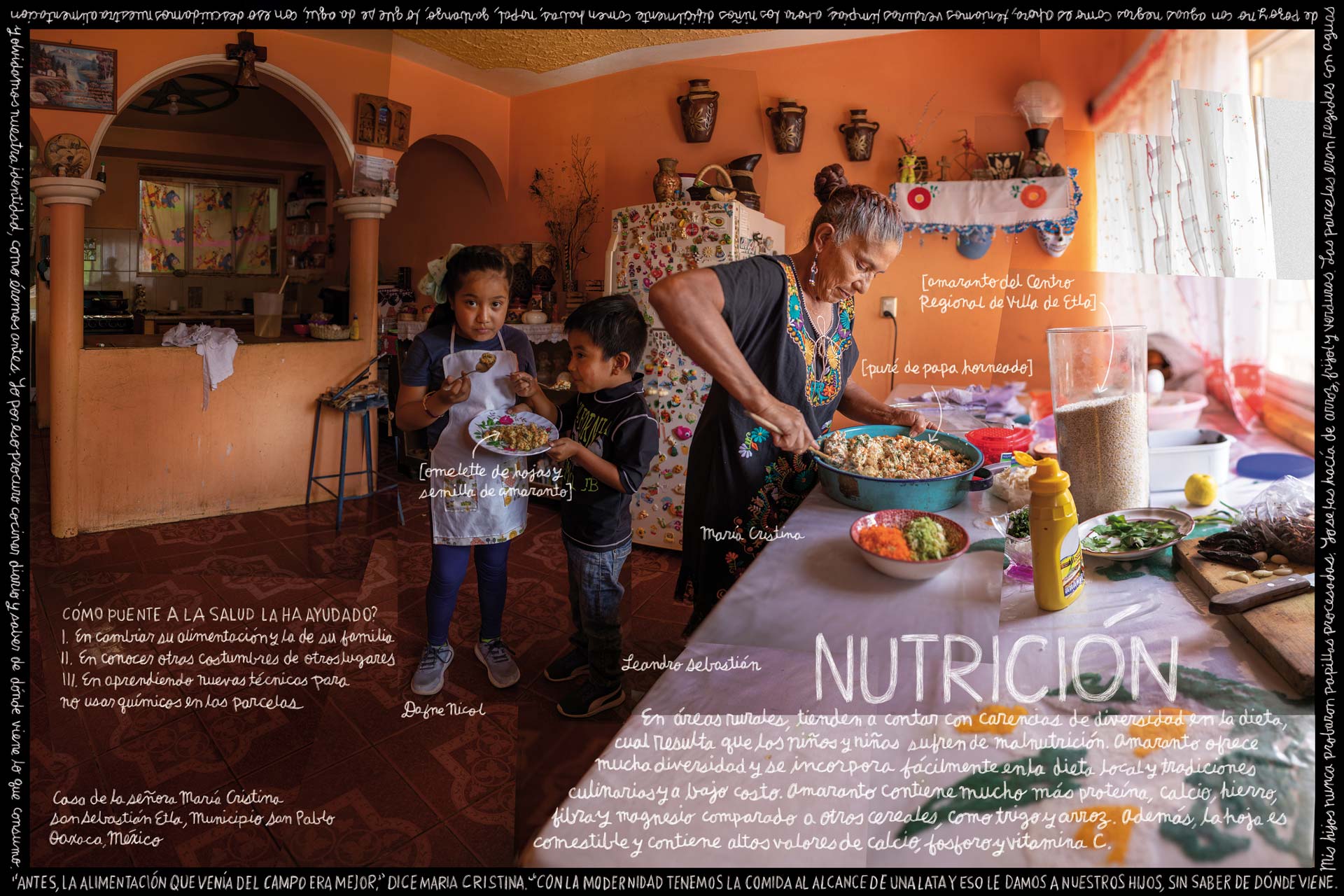
Nutricion - Flat film by Douglas Gayeton
[Click to Expand] - Maria Cristina prepares a healthy breakfast for her grandchildren – baked potato mash with an omelet with amaranth seeds and leaves. She learned these techniques in healthy cooking workshops run by Puente a la Salud Comunitaria. Flat film by Douglas Gayeton.

Through Puente’s cooking workshops, Irma met other women in her community seeking to improve their families’ diets. One friend,María Cristina, uses her newfound knowledge to regularly prepare healthy amaranth-themed meals for her grandchildren, Dafne Nicol and Leandro Sebastián. “In rural areas, there is a lack of dietary diversity which results in  malnutrition amongst girls and boys,” Maria notes. “Amaranth offers a great deal of diversity and is easy to incorporate into our meals at a low cost.” By increasing healthy whole foods like ancient grains in their diets, Oaxacan families improve their nutrition and wellbeing.

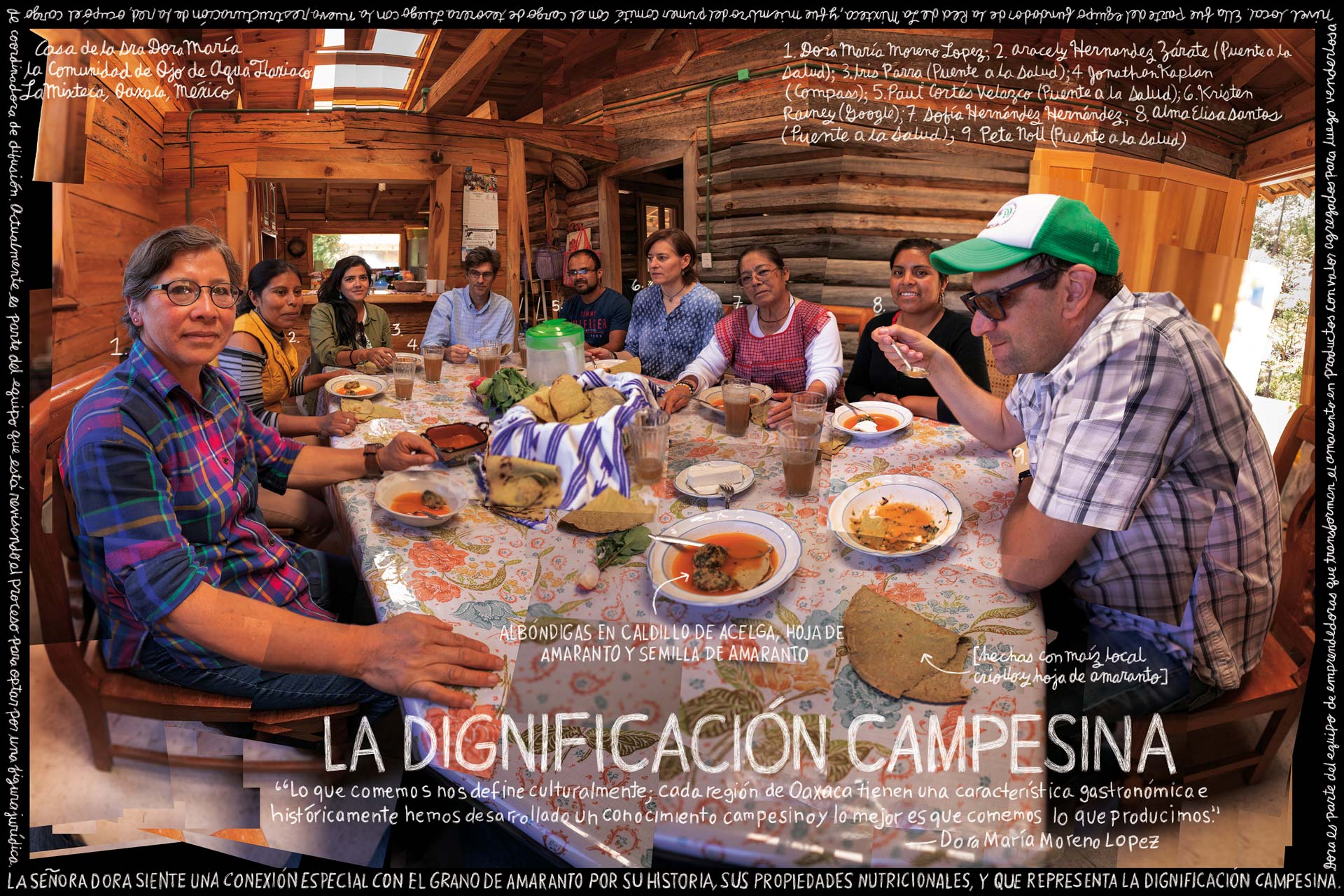
La Dignificacion Campesina - Flat film by Douglas Gayeton
[Click to Expand] - The dignification of campesino life means honoring indigenous customs and traditions that have been devalued for centuries. By eating together and reclaiming native foods with high nutritional value and cultural significance, Mexican communities become healthier and stronger. “What we eat culturally defines us; each region of Oaxaca has gastronomic and historical characteristics that we have developed through the knowledge of campesinos. The best part is that we consume what we produce.” - Dora Maria Moreno Lopez. Flat film by Douglas Gayeton.

Amaranth is a pseudo-cereal similar in nutritional make-up to its cousin plant quinoa. It boasts a richer nutrient profile than comparable cereals like wheat, rice, and corn. Families prepare amaranth in any number of ways:

  • Raw amaranth seeds are 13 to 15 percent protein, among the highest for any grain, with high values of the essential amino acid lysine. Amaranth seeds are also high in fiber, calcium, iron, potassium, phosphorus, zinc, and vitamins A and C. Moreover, combining amaranth seeds with corn, a major component of the Mexican diet, forms a complete plant-based protein.  Seeds can be substituted for quinoa in any recipe. To prepare plain, boil three parts water with one part amaranth for 30 minutes, rinse and strain, then serve. For added flavor, sauté the raw seed with onions and garlic then add broth, like a risotto, stirring until soft.
  • Amaranth leaves are also edible, containing more calcium, phosphorus, and vitamin C than spinach, in addition to the high levels of folate and other nutrients present in the seeds. These micronutrients  strengthen diets and prevent and treat malnourishment. Prepare as you would spinach; eat the leaves raw in a salad or cook them to add to any soups or other dishes.
  • Amaranth cereal is a great addition to smoothies, granola, oatmeal, soups, salads, or any other.
  • Amaranth flour can be substituted for up to 20% of wheat flour in baked goods.

Growing Young Farmers, Protecting Seeds, and Building Soil

Mesoameric’s agricultural legacy begins with corn. The oldest seeds were found in Tlacolula, Oaxaca; one of agronomy’s great mysteries is how centuries of intentional plant breeding here led to the domestication of corn from the tiny teocintle. Incredible human innovations like these changed the face of history—without seed sharing and saving, this biodiversity could have been lost in a single generation.

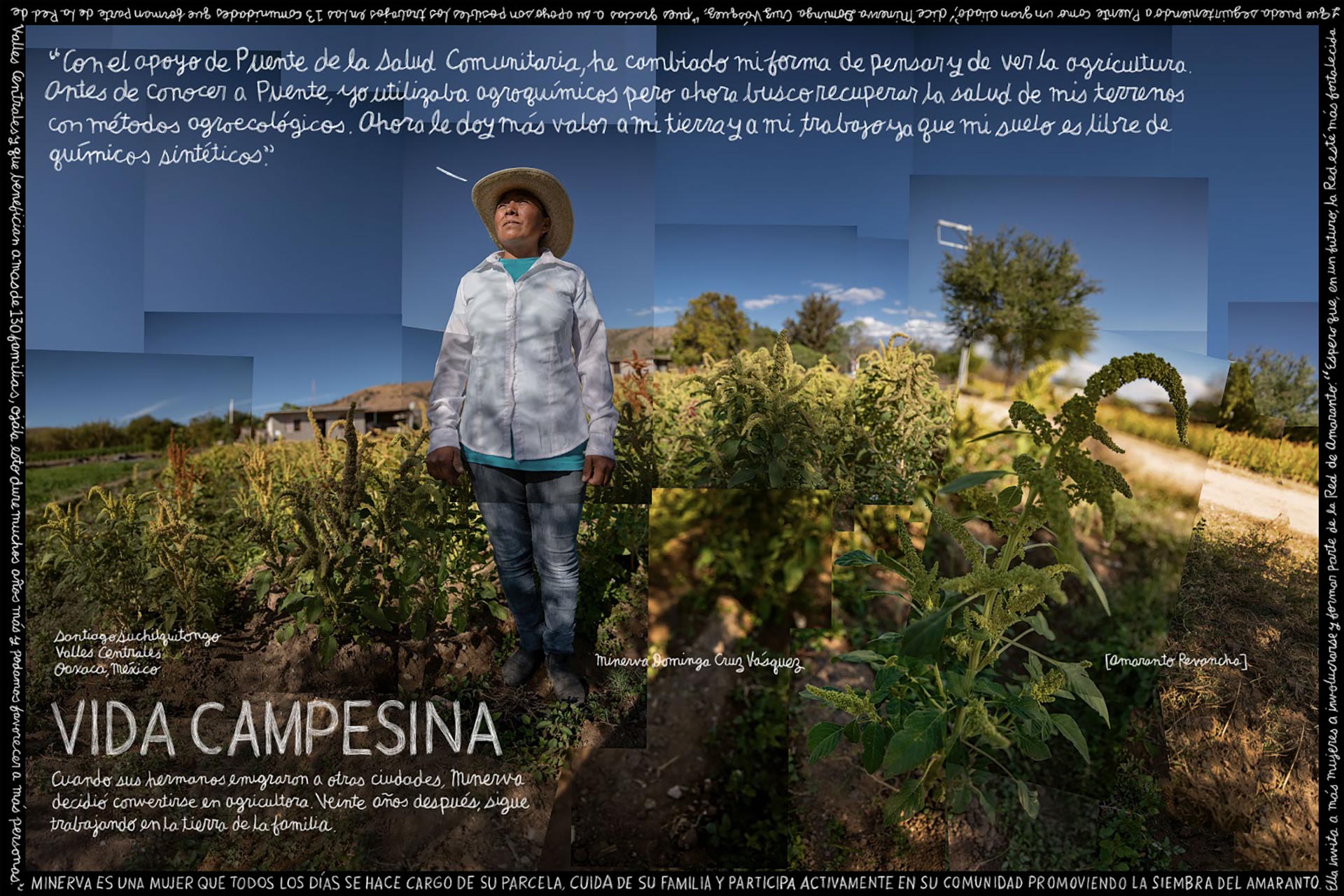
Vida Campesina - Flat film by Douglas Gayeton
[Click to Expand] - After her brothers migrated to neighboring cities in search of work, Minerva was left to run the family farm, but instead of following her community’s common farming practices, Minerva charted her own course. “With the support of Puente de la Salud Comunitaria, I changed my way of thinking about agriculture. I used agrochemicals before, but now I search for ways to regenerate the health of my land using agroecological methods. I continue to give more value to my land and my work, and my soil is now free of synthetic chemicals.” — Minerva Domingo Cruz Vasquez. Flat film by Douglas Gayeton.

Minerva Cruz always wanted to be a farmer. She has a deep appreciation for the land she was raised on, but when she started out, Minerva used chemical inputs including fertilizers and synthetic pesticides like many of her neighbors. It wasn’t until she noticed that she had to buy increasing amounts of chemicals each season to ensure the same level of productivity that she decided to explore other farming practices.

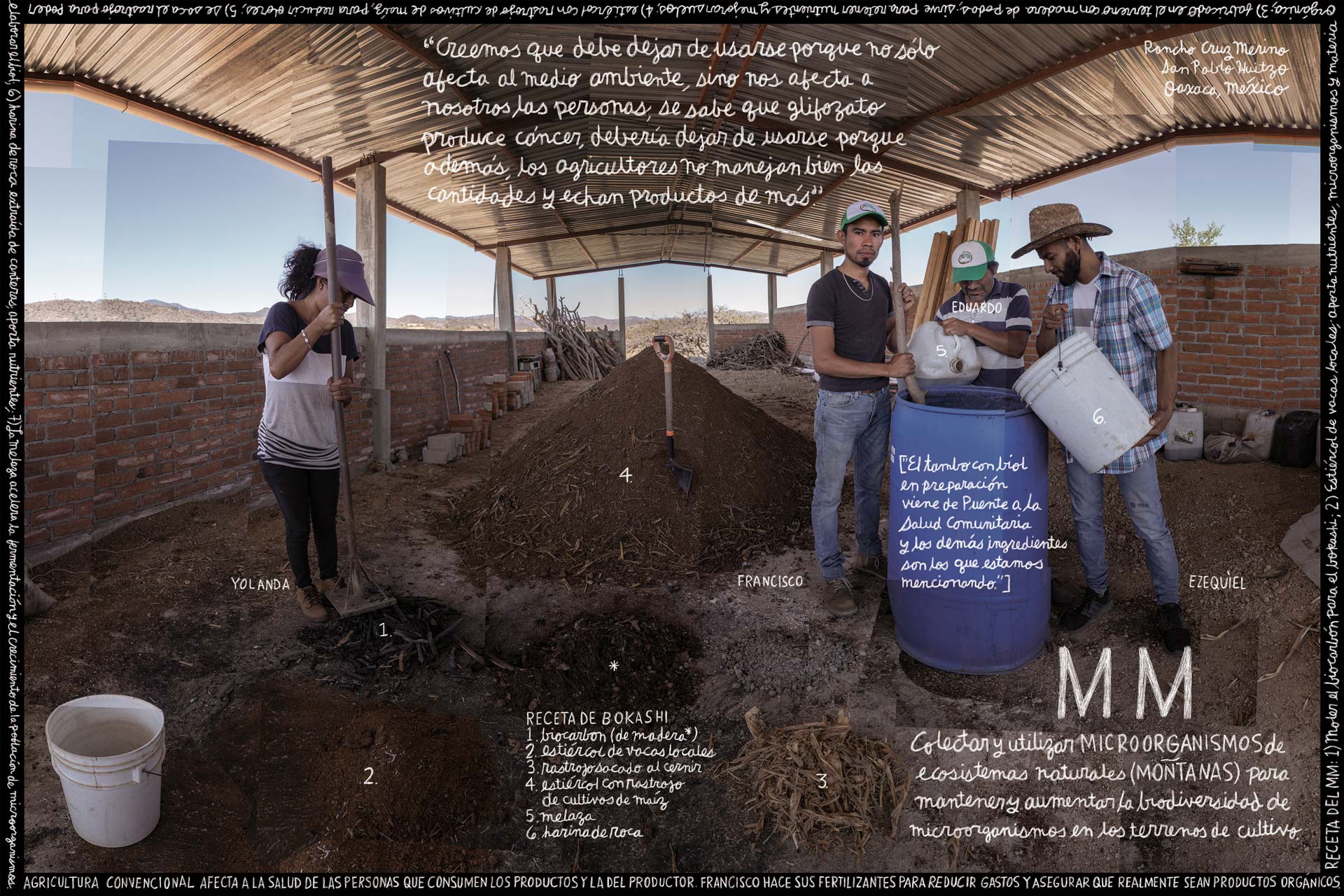
Mountain Microorganisms - Flat film by Douglas Gayeton
[Click to Expand] - In conventional agriculture, synthetic fertilizers and herbicides—which can contain carcinogenic ingredients such as glyphosate—can have perilous affects on both consumer and producer health. And they can be expensive. To reduce environmental and health risks, and guarantee his fertilizers are truly organic, Francisco makes MM with microorganisms collected from nearby forests. They’re mixed with manure, carbon, rice husks and even molasses, then maually processed using anaerobic fermentation. “Living soils” like Francisco’s help farmers maintain and improve the microbial diversity of cultivated land. Flat film by Douglas Gayeton.
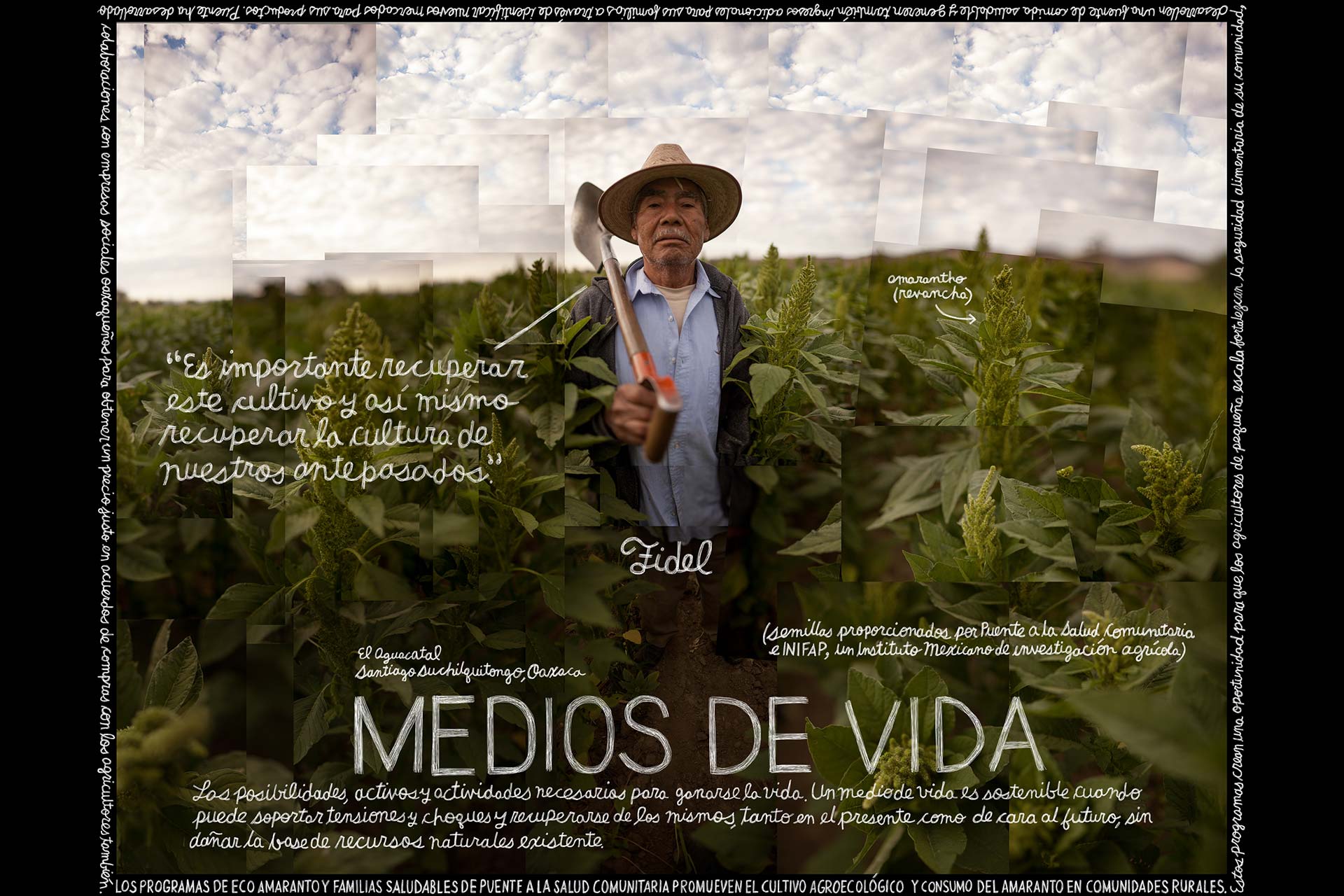
Medios de Vida - Flat film by Douglas Gayeton
[Click to Expand] - The possibilities, assets and activities necessary to make a living. A livelihood is sustainable when it can withstand tensions and shocks and recover from them, both now and in the future, without damaging the existing natural resource base. Flat film by Douglas Gayeton.
"Guardiana de Semillas" Flat film by Douglas Gayeton
[Click to Expand] - Preserving bioregionally adapted seeds safeguards the biodiversity of vital food sources while proving greater resilience in the face of climate change. Flat film by Douglas Gayeton.

Like many farmers in this region, Minerva has turned to the past to learn about the agricultural methods used by her ancestors—from seed saving and sharing to agroecological practices. When Minerva and her neighbors implemented these techniques, other regions of Oaxaca took notice.

The Mixteca Alta of Oaxaca has a particularly dry and arid climate, rendering agriculture a risky and difficult endeavor. Manuel Villegas Mora had long thought that if farmers found a way to preserve and enhance their delicate soils without synthetic fertilizers, they could increase productivity and improve family livelihoods.

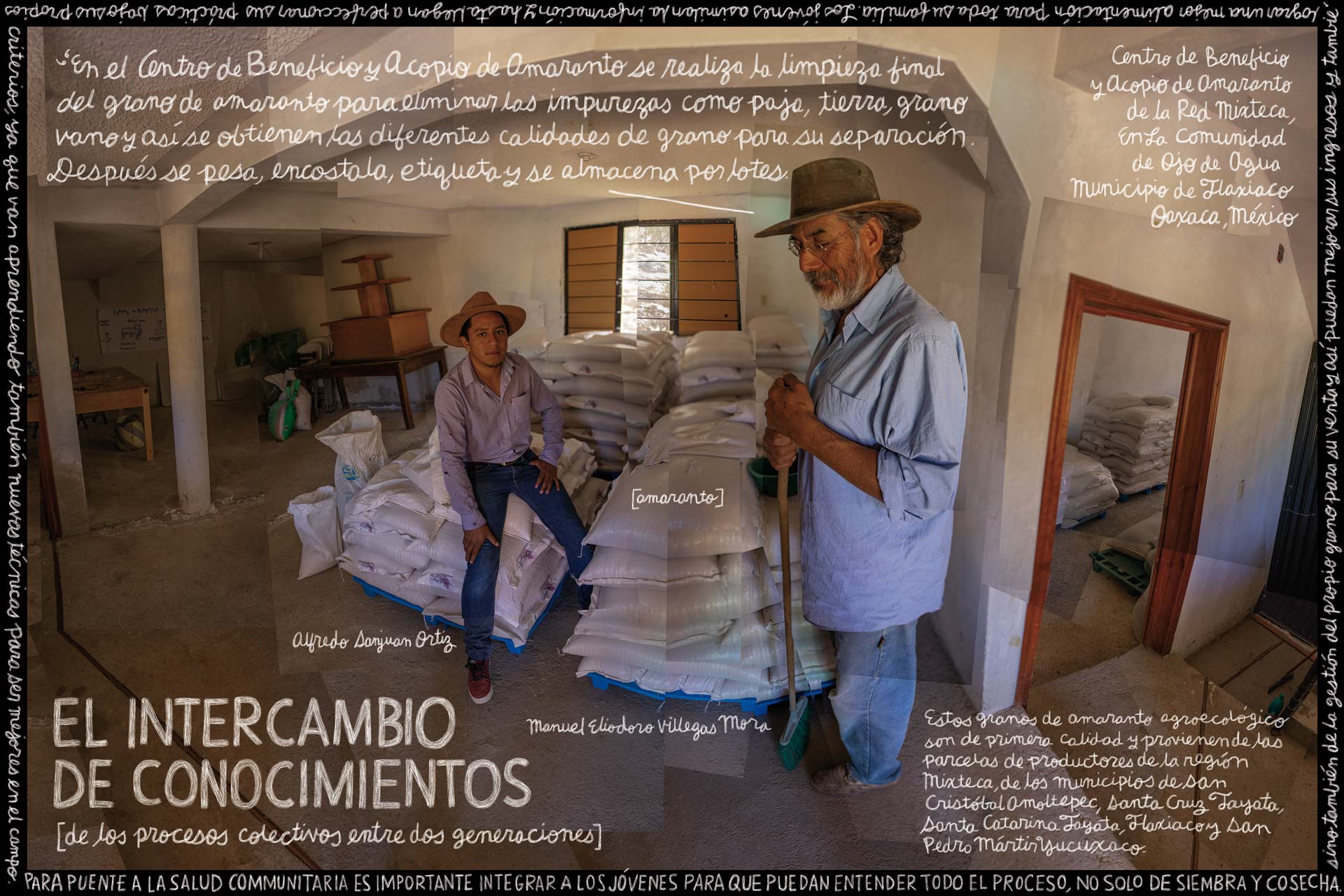
For Manuel, building biodiversity began with building healthy soil; he now teaches young farmers to cultivate thriving ecosystems by breaking their reliance on synthetic chemical fertilizers and pesticides. They’re learning a time-intensive process to ferment locally available organic matter then apply it directly on the soil. Manuel acknowledges that the process of recuperating their farmlands and replenishing the soil with biodiverse microorganisms may take years.

Intercambio de Conocimientos - Flat film by Douglas Gayeton
[Click to Expand] - Fostering the exchange of knowledge between generations is a core mission of Puente a la Salud Communitaria, a non-governmental organization in Oaxaca, Mexico. By integrating youth into every step of amaranth production, older farmers are able to share their mastery of the diverse skills needed to grow, manage, process and sell this valuable crop. At the same time, as young people become familiar with amaranth’s supply chain, they can identify where opportunities exist to test new ideas or to create value added products that help them expand into new markets. Flat film by Douglas Gayeton.
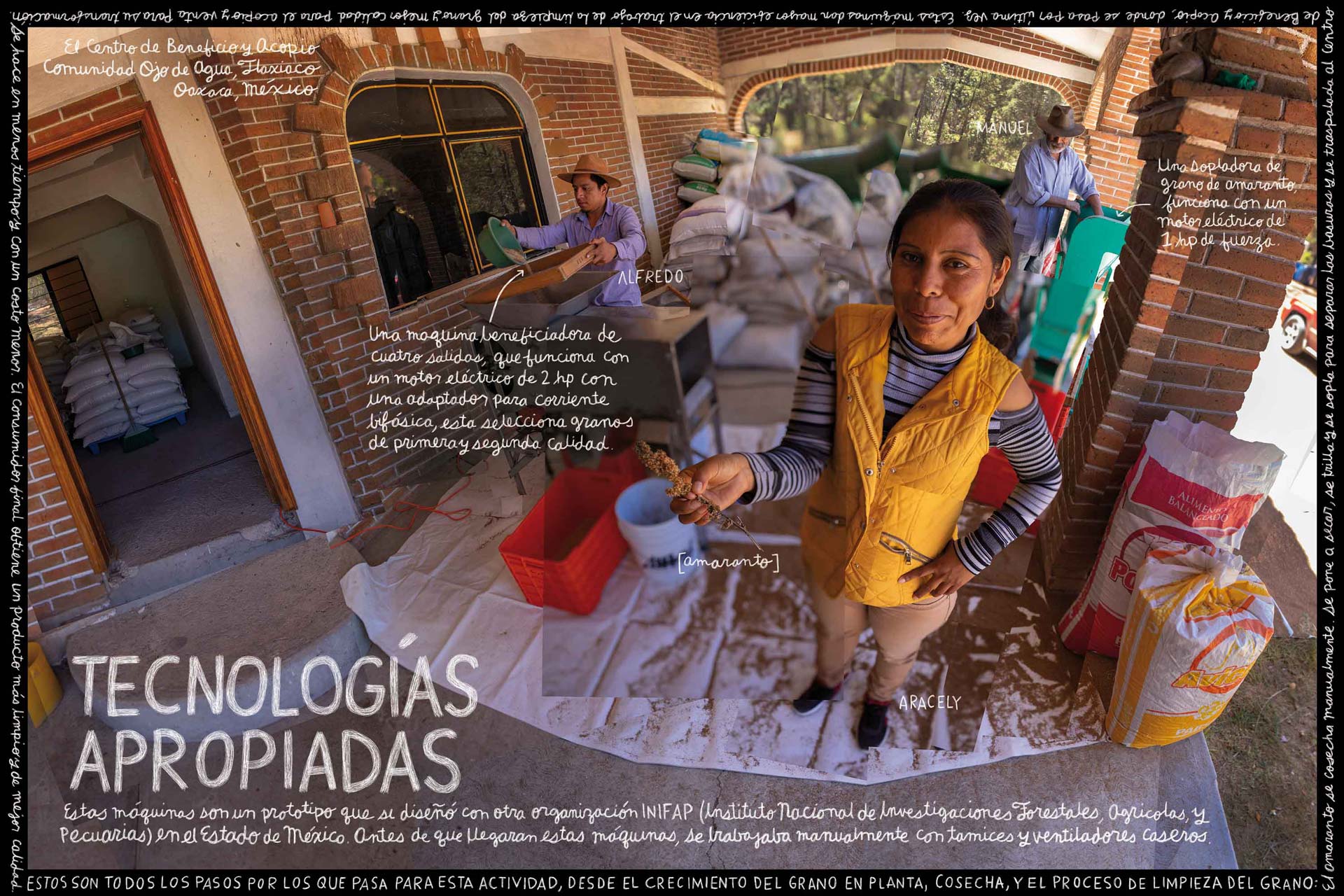
Tecnologias Apropriadas - Flat film by Douglas Gayeton
[Click to Expand] - Knowledge transfer cannot be effective unless farming becomes an economically viable way of life for young people in rural areas. The use of appropriate technology at the local level allows farming communities to add value to amaranth grain and earn additional income from their crops. Just the mere fact of cleaning, then popping amaranth grain, the most common form of amaranth consumption in Mexico, doubles or triples its value. If farmers have access to these technologies at the local level it can be an economic game-changer. Flat film by Douglas Gayeton.
Radio Comunitaria - Flat film by Douglas Gayeton
[Click to Expand] - Another form of knowledge sharing is through community radio. XETLA radio programs are broadcasted in Mixteco and Español and available throughout the Oaxacan countryside. “Fuerza del campesino” (Peasant Strength) is a daily radio program featuring interviews with specialists who discuss community-based agricultural and livestock activities, while “Colores y Sabores del Campo” (Colors and Tastes of the Countryside) is a program supported by nutritionist and medical expert interviews that shares the food culture of indigenous populations. Finally, “La Hora Mixteca” (the Mixtec Hour) collaborates with Radio Bilingual located in Fresno, California with a mix of music and current event programming. The station provides an important outlet for public policy change advocates on a local level, and remains one of the most important sources of communication and news in rural Mexico. Transmitting these radio programs in indigenous languages further strengthens sovereignty and cultural diversity in these regions. Flat film by Douglas Gayeton.

Farming in rural Mexico has never been a high-income profession, but access to appropriate technologies, ranging from seeding to threshing and cleaning machines, can save labor, help share knowledge, and dramatically increase the profitability of small-scale agriculture. Through access to appropriate technologies, farmers like Minerva and Manuel are able to earn a living wage and attain viable livelihoods from their farms.

Another form of knowledge sharing is through community radio. XETLA radio programs are broadcast in Mixteco and Español and available throughout the Oaxacan countryside. “Fuerza del campesino,” a daily radio program, features interviews with specialists who discuss community-based agricultural activities, while another show, “Colores y Sabores del Campo” (Colors and Tastes of the Countryside) broadcasts interviews with nutritionists and medical experts who share the food culture of indigenous populations. Finally, “La Hora Mixteca” (the Mixtec Hour) collaborates with Radio Bilingual (a show based out of Fresno, California) to offer a mix of music and current event programming. The station provides an important outlet to share knowledge on a local level, and remains one of the most important sources of communication and news in rural Mexico.

Women and Amaranth: Strengthening the Value Chain

In indigenous mountain towns like San Cristobal Amoltepec, located in Oaxaca’s Alta Mixteca region, wage-paying jobs are scarce. Amoltepec women like Alma Ortiz can earn 50 pesos, or just over $2 USD per day, weaving straw hats, while many others find work as house cleaners or store attendants. Both types of work require travel, which separates women from their young children and families, and can be quite expensive and difficult given road conditions and the lack of transport options.

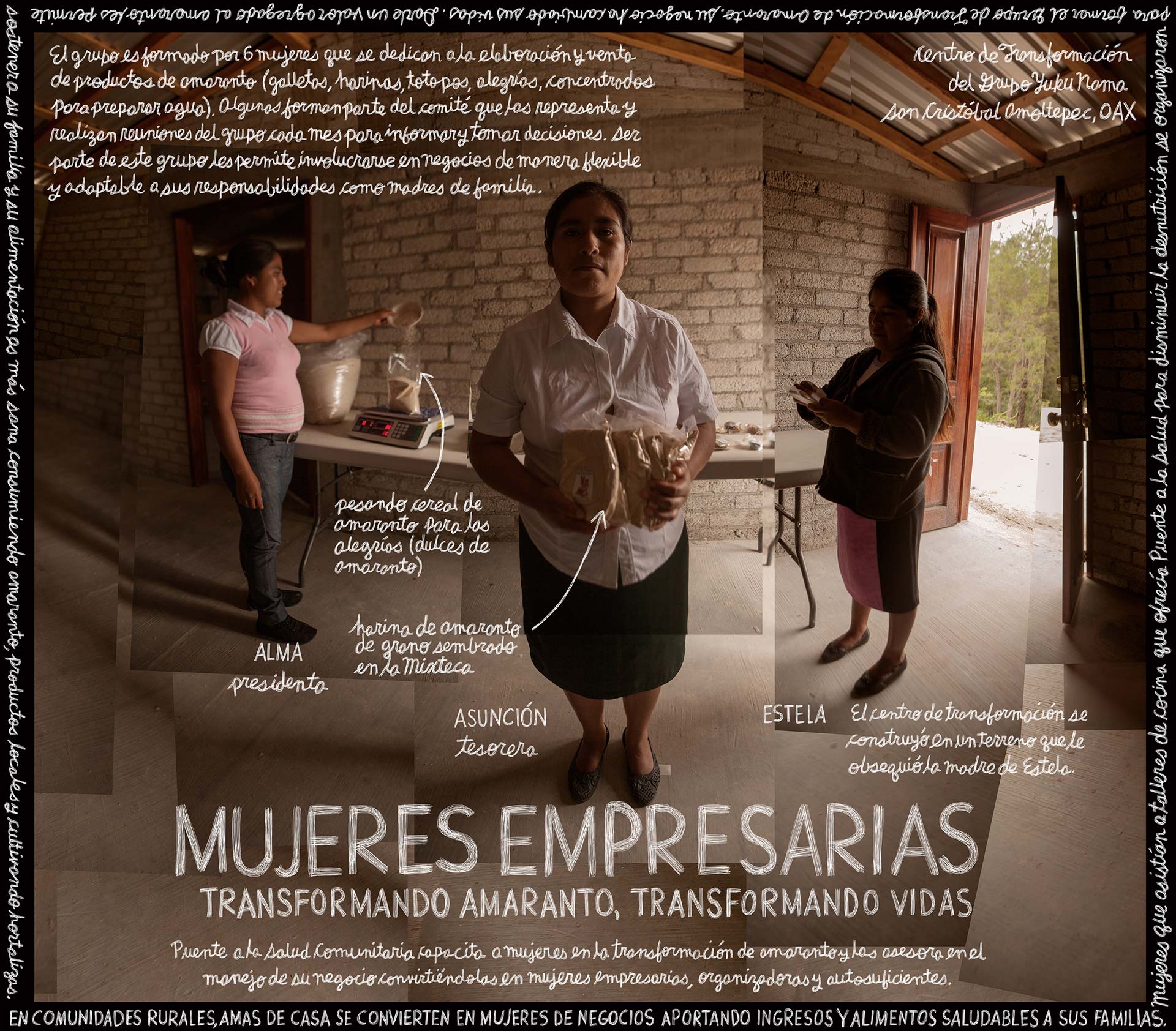
Mujeres Empresarias - Flat film by Douglas Gayeton
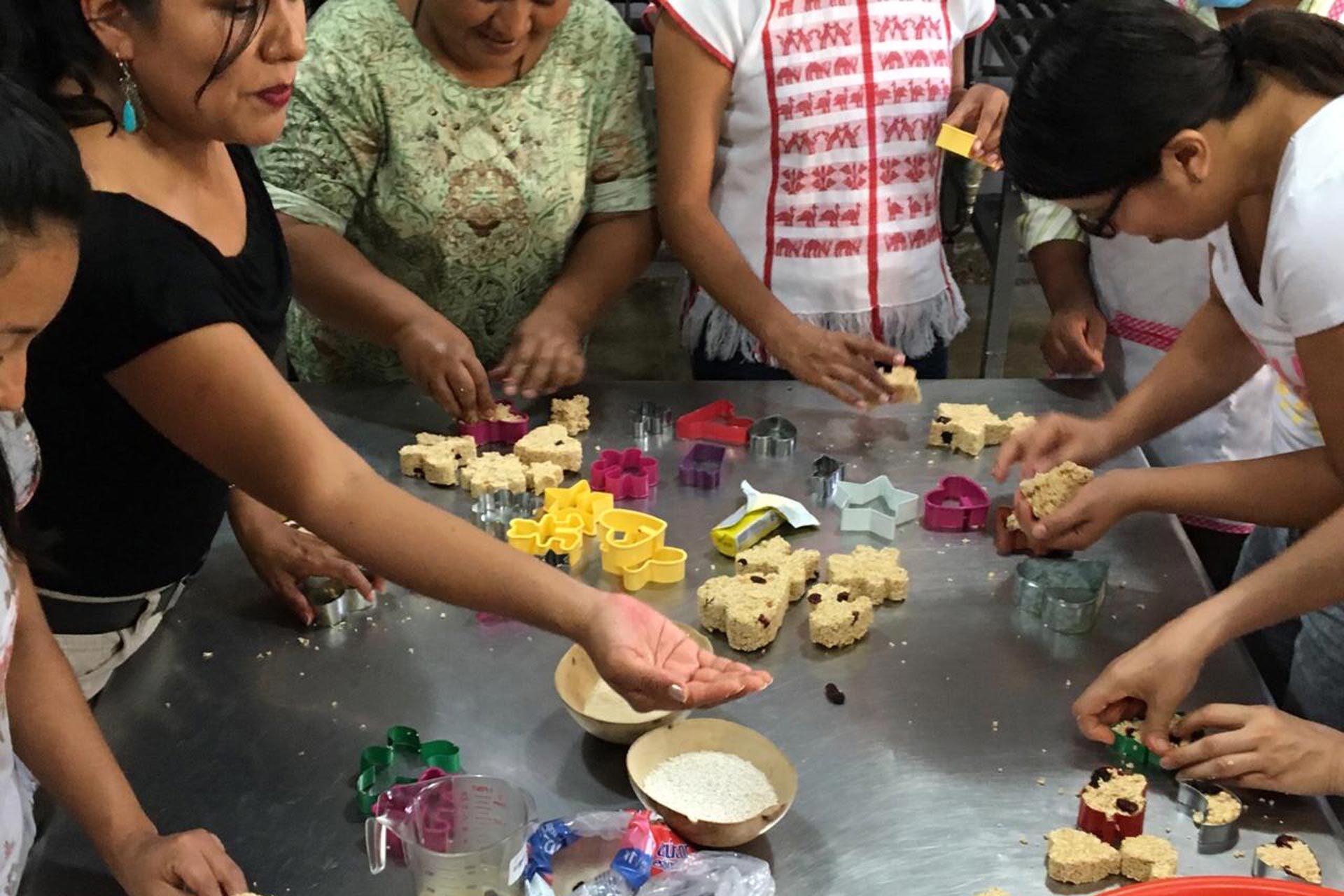
[Click to Expand] - After attending cooking workshops offered by Puente a la Salud to help reduce malnutrition in their communities, these women formed a collective dedicated to the preparation and sale of amaranth products (cookies, flours, chips, and alegría bars). By adding value to amaranth, these women can support their families and by consuming this grain—along with vegetables they grow—they have healthier diets. Flat film by Douglas Gayeton.

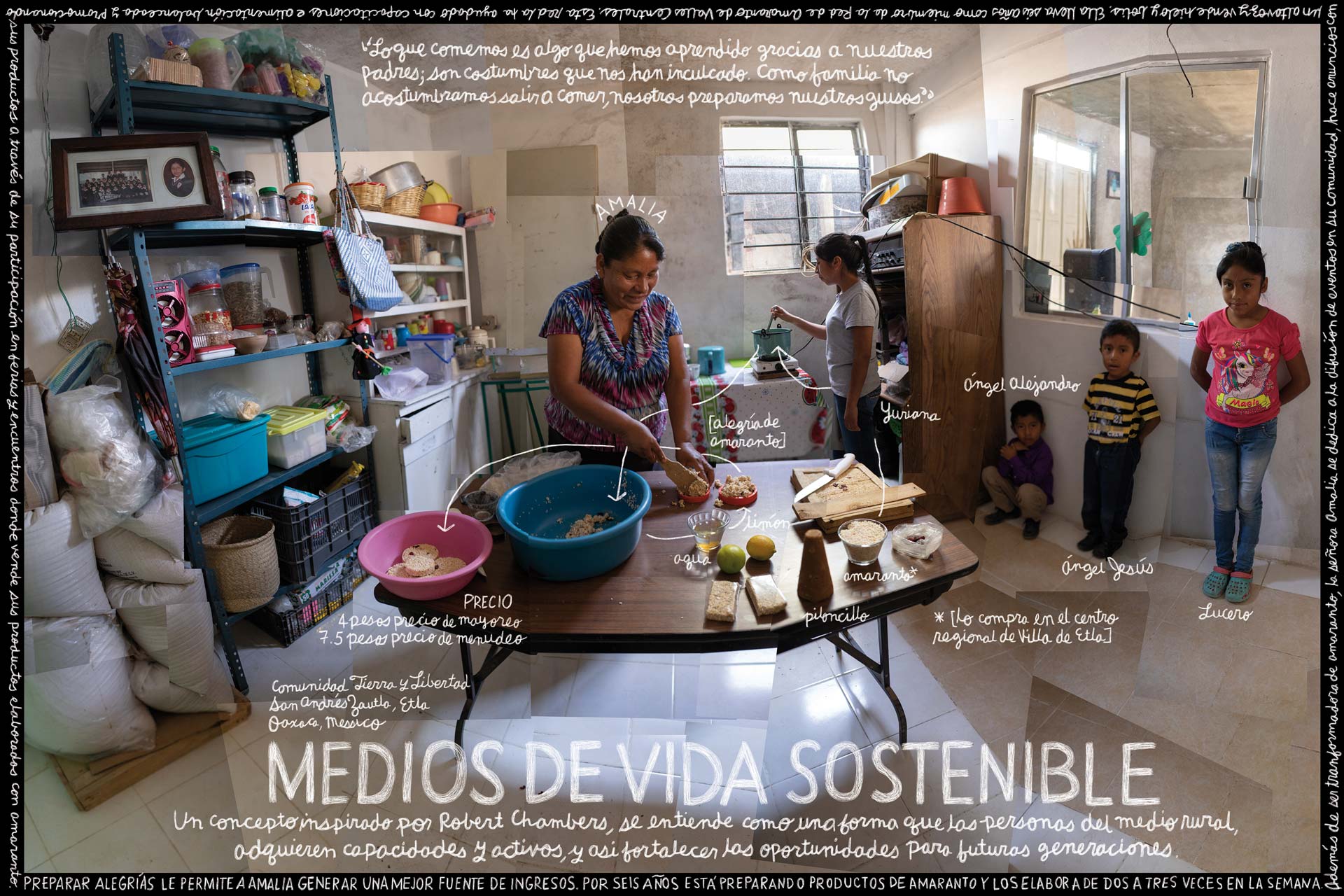
With Puente’s help, Alma created a social enterprise that brings together local women. They develop a number of value-added products with amaranth, which they sell in neighboring villages. By working together, community entrepreneurs both increase their own access to healthy foods while also earning sufficient income to support their families. The opportunity to work in the same community where they live eliminates travel expenses and increases the quality of life for marginalized families.

Medios de Vida Sostenible - Flat film by Douglas Gayeton
[Click to Expand] - “Sustainable livelihoods”, a concept inspired by Robert Chambers, refers to how rural people acquire capacities and abilities to strengthen opportunities for future generations. Flat film by Douglas Gayeton.
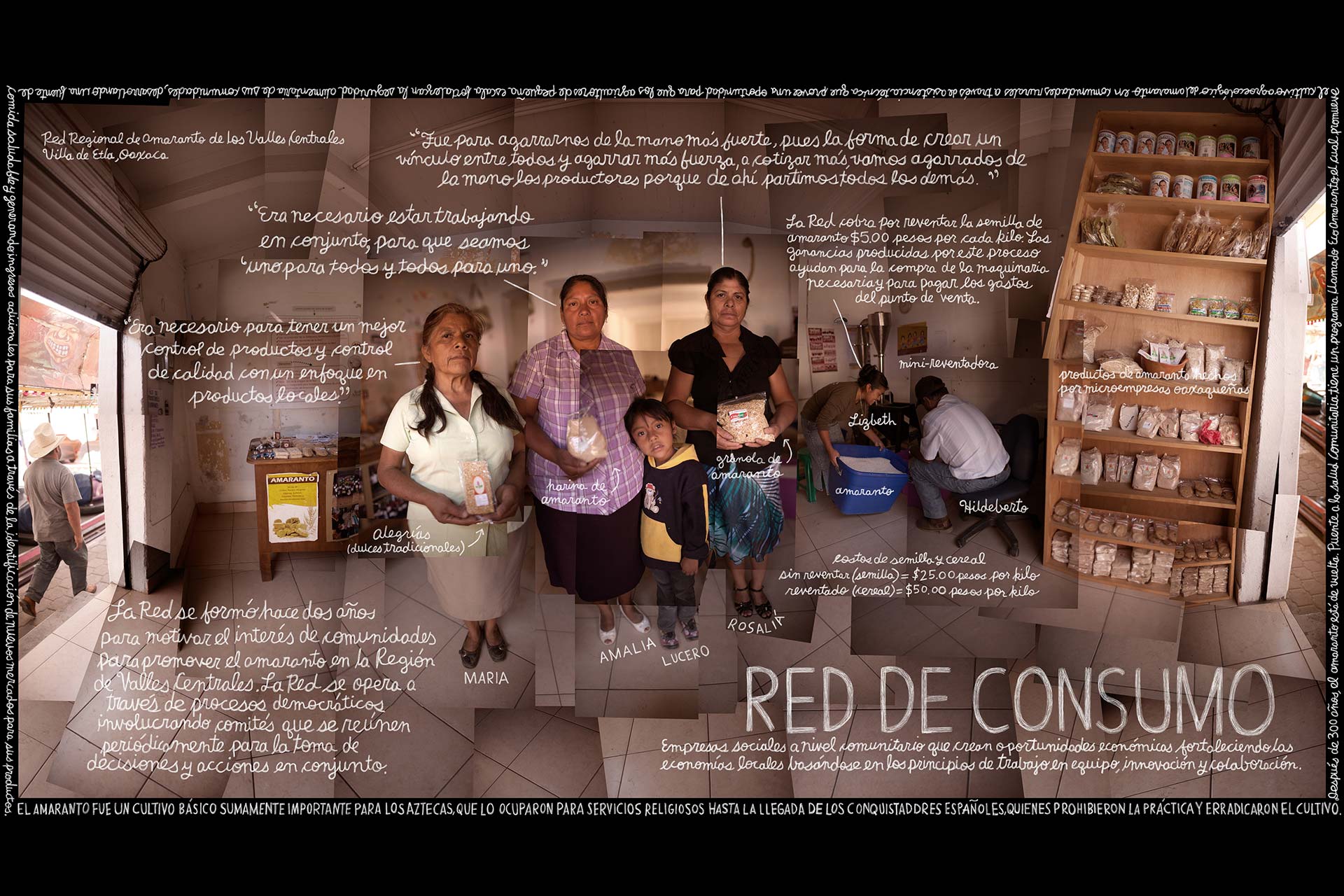
Red de Consumo - Flat film by Douglas Gayeton
[Click to Expand] - After attending cooking workshops offered by Puente a la Salud Comunitaria to help reduce malnutrition in their communities, these women joined the Red de Consumo (Healthy Food Network) and formed a branch dedicated to the preparation and sale of amaranth products (cookies, flours, chips, and alegría granola bars). Women can support themselves and their families by adding value to amaranth, and can also create healthier diets by consuming this grain along with vegetables they grow. Flat film by Douglas Gayeton.
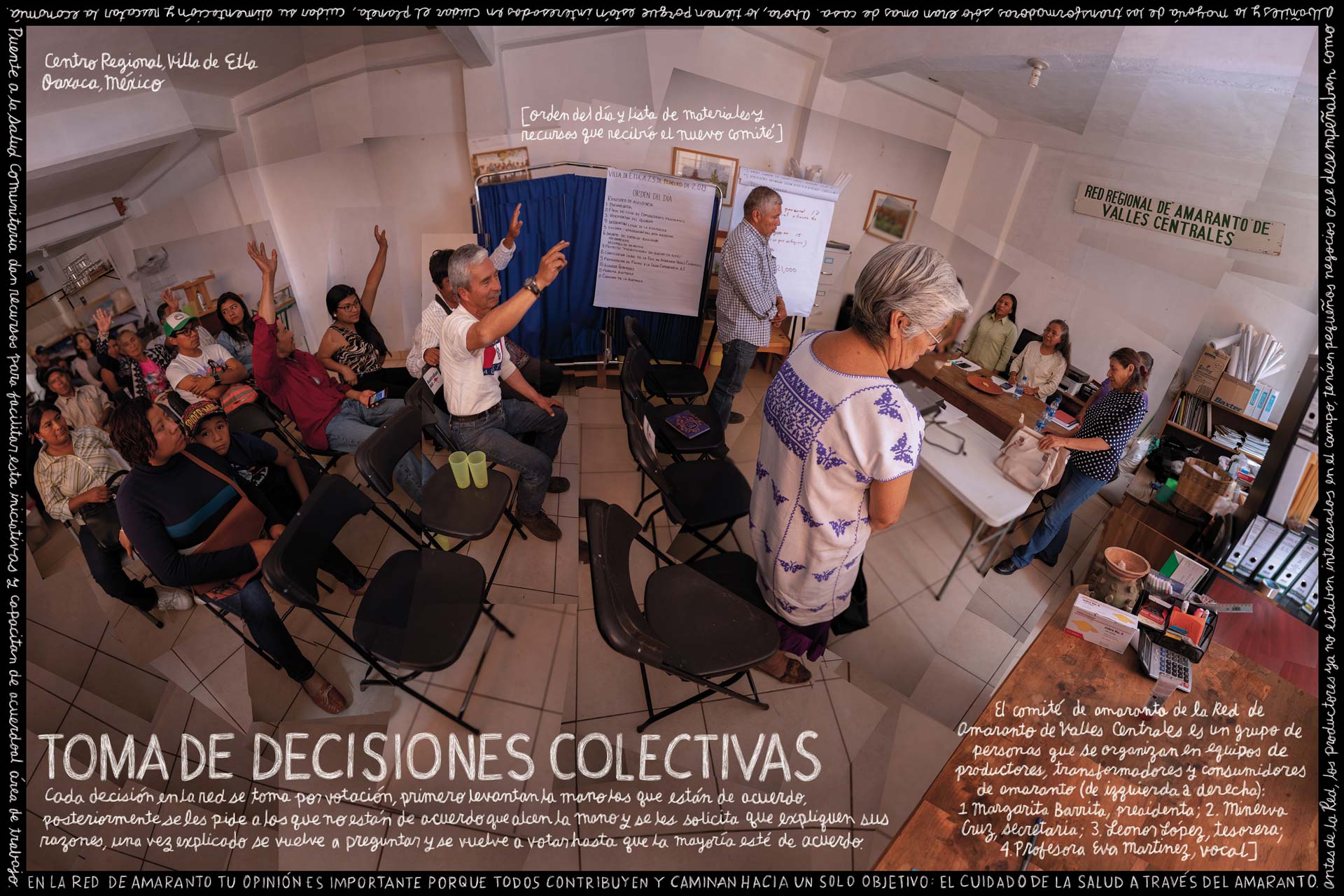
Toma de Decisiones Colectivas- Flat film by Douglas Gayeton
[Click to Expand] - The Red de Consumos (Healthy Food Networks) are made up of farmers, microenterprise groups, and consumers that meet every two months to make collective decisions through popular assembly. These grassroots organizing structures strengthen the amaranth value chain and increase local organization around healthy food systems. Flat film by Douglas Gayeton.

To share knowledge and provide access to technology in their communities, female entrepreneurs also form volunteer-operated cooperatives. Grassroots networks across Oaxaca like the Red de Consumo (Healthy Food Network) are made up of farmers, microenterprise groups, and consumers. The networks have helped strengthen the amaranth value chain and increase local organization around healthy food systems by increasing accessibility to affordable, healthy food at a community level. Cooperative members see their labor as a service to the community at large. Collective social entrepreneurship, which operates through volunteer collaboration, reinforces community fabric and forges new social ties.

Amaranth Builds Community by Celebrating Indigenous Traditions

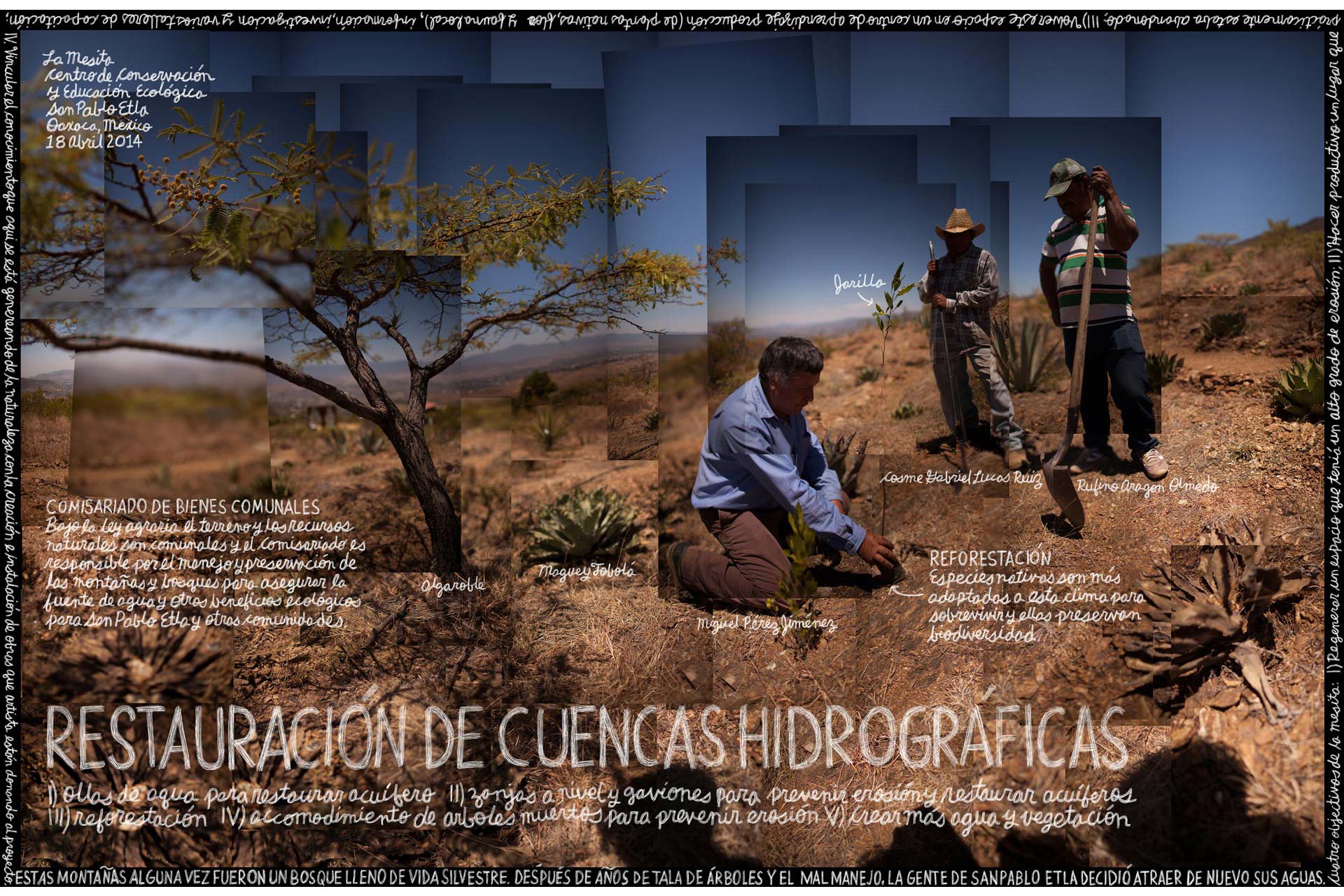
Oaxacan communities are defined by a highly formal cooperative model called Usos y Costumbres, a system based on public participation, volunteerism and community-led decision making. It’s an indigenous governance structure steeped in traditions and customs, with community members working together to make collective decisions through asambleas (town meetings) to implement community improvement projects through shared labor practices like tequio and gueza. In this tequio, Miguel and his neighbors volunteer to reforest and restore their community watershed.

Tequio - Flat film by Douglas Gayeton
[Click to Expand] - In rural areas outside Oaxaca, Mexico, communities are defined by a highly formal cooperative model called Usos y Costumbres. This traditional indigenous governance structure requires community members to engage in public participation, volunteerism and community-led decision making conducted through asambleas or town meetings. Villagers at these gatherings are expected to commit a portion of their time each year to collaborative acts and social interactions that strengthen solidarity in their community. These obligations have a name: tequio. Performing tequio might take the form of building a road or a common building, like a school or church. For Miguel, a villager from San Pablo Etla, tequio means planting saplings so that a barren hillside can one day return to the forest it had been centuries ago. Flat film by Douglas Gayeton.
Restauracion de Cuencas Hidrograficas - Flat film by Douglas Gayeton
[Click to Expand] - In San Pablo Etla, a rural community near Oaxaca, volunteers reforest, install water conservation systems, monitor and protect their community’s nature preserve through the use of tequios. Flat film by Douglas Gayeton.

A unique form of indigenous celebration and reciprocity in Oaxaca is guelaguetza — the idea of giving to one’s community as a form of celebration, without hoping to receive anything in return.

Today, the Guelaguetza is an annual event featuring indigenous dancing from Oaxaca’s seven regions, but the origins of guelaguetza extend back to pre-Columbian times, with agricultural celebrations of corn, amaranth and other crops and to pay tribute to earth gods.

Reclaiming Traditions - Giant puppets dance in the street as rural communities use indigenous traditions to celebrate and elevate their local culture together.
Youth and Heritage - A young child wears a handmade mask, showing how community networks integrate youth into every step of preserving native foods.
Indigenous Celebration - Dancers wear colorful costumes to honor deep-rooted customs and bring life to the true spirit of reciprocity and shared community fabric.
Reclaiming Native Foods - A group works together to prepare nutritious, ancient grains like amaranth, strengthening healthy food systems at a community level.

By reclaiming indigenous crops like amaranth and traditional forms of agriculture, rural communities reaffirm their identity and sovereignty. Amaranth provides Oaxacan communities with the opportunity to celebrate and elevate their culture, together.

Amaranth and the Reawakened 25

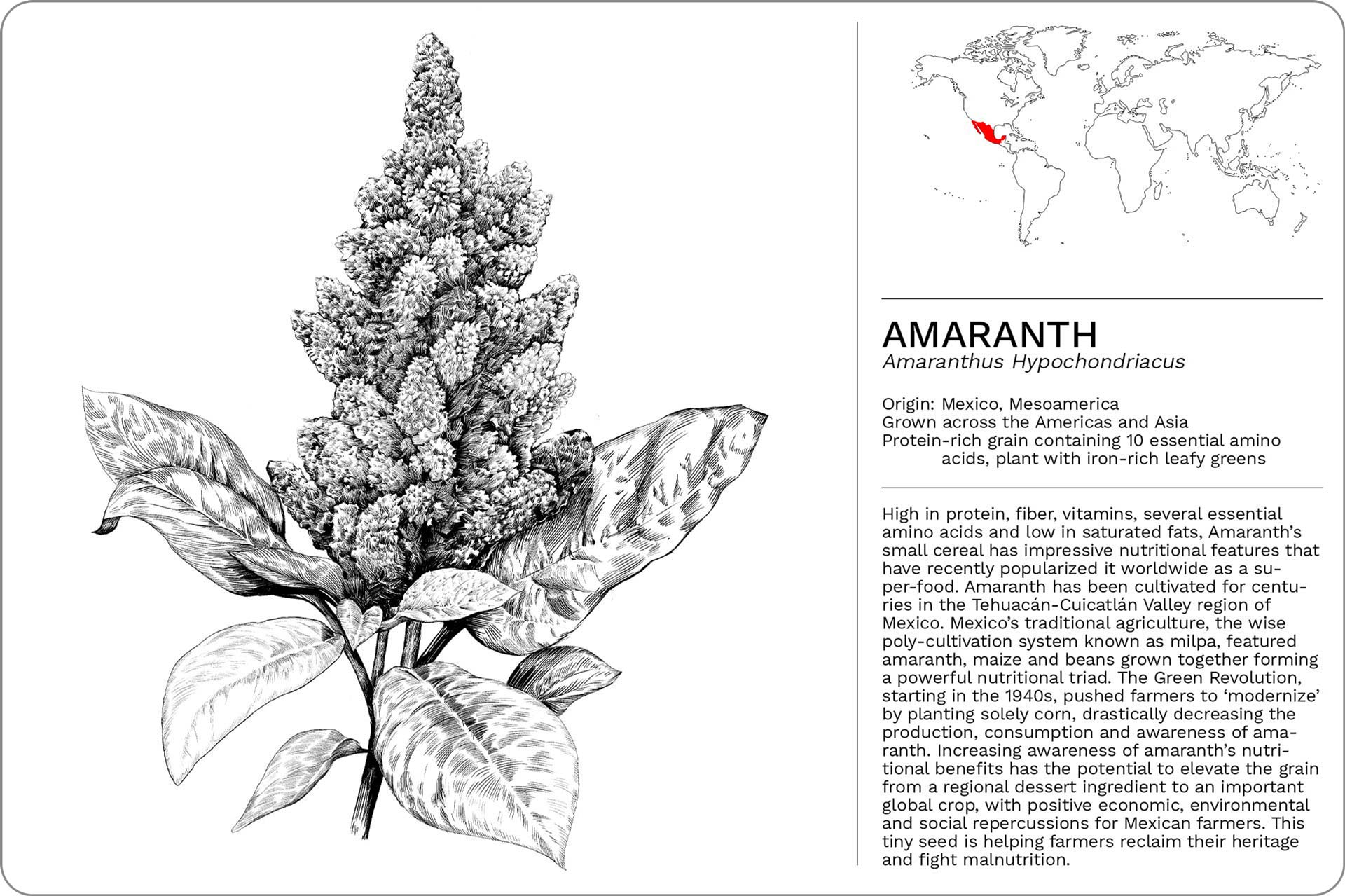
Amaranth is a herbaceous plant growing 4 to 9 feet (1.2-3 m) tall. The plant is cultivated in temperate regions as an annual and used either as an ornamental plant or as a food source. The long stems alternate simple leaves and end in a colorful spear of radially symmetric spiky flowers (panicle inflorescence) that hide thousands (up to 60,000 seeds) of tiny amaranth grains. Amaranth is part of the plant family Amaranthaceae, which also features quinoa, beets and spinach. There are 60 different species of amaranth.

Click to expand.

Culinary Use

The seeds and leaves of the Amaranth plant are commonly eaten. The tiny seeds have a flavor similar to quinoa. Amaranth is easy to cook, simply needing to boil in twice the volume of water to grain for 15-20 minutes. Amaranth is boiled into porridge or sweet beverages and ground into flour and baked into desserts. The seed is also popped, mixed with sweeteners such as agave syrup or honey, and formed into balls or bars for a high protein snack. In Mexico the leaves (called “quelites,” a blanket term for edible green leaves) are utilized similarly to spinach, cooked into dishes and served sauteed as a side. The leaves are also commonplace in many Asian and African cuisines.

Nutrition and Medicinal Use

The amaranth grain is naturally gluten free and close to a complete protein with 10 essential amino acids including lysine, which most other grains lack. A serving of grain amaranth contains upwards of 20% of the recommended daily value of protein, fiber, vitamin B6 and several other minerals. Amaranth leaves, when cooked, contain high amounts of vitamin C, vitamin A, calcium and manganese and notable amounts of iron and potassium.

Agriculture

Amaranth grows best in hot, tropical environments but can grow in temperate regions without frost. Amaranth is comparatively drought resistant, making it a valuable crop in times of erratic climatic change and water scarcity. With its tiny grains, a small amount of amaranth by weight can plant a large area, making it a cost-effective crop for small farmers. Compared to the number of seeds used for planting, amaranth produces a high yield with large seed heads and up to 60,000 grains per stalk. The grain is harvested an average of 90-180 days after planting, depending on the variety and season’s weather. Amaranth leaves are picked carefully to avoid slowing down the maturation of the grain. Amaranth is often grown in field rotation with beans and corn to prevent soil degradation.

Amaranth seeds are difficult to thresh and clean. The seeds are wrapped in a cuticle topped off with tiny sharp spines, painful for those who handle the unthreshed grain. Machines to thresh and clean amaranth grains are hard to come by and expensive, especially for small scale producers. This is perhaps the greatest technical difficulty present in preventing the expansion of amaranth cultivation- the lack of appropriate and accessible processing technology.

History

Amaranth is native to Mexico and Central America and has been a traditional staple of the region for centuries. The cultural roots of amaranth go back to 6500 BCE. The domestication of amaranth, corn, beans, chile and other crops in the Tehuacán-Cuicatlán Valley region by the ancestors of the current Popolocas marked the beginning of Mesoamerican agriculture. People of the Tehuacán-Cuicatlán Valley region were incredibly skilled agrarians who not only began the cultivation of many important crops, but also developed irrigation runoff control technology, as seen in the Purrón Dam Complex.

The Aztecs, who migrated to the Valley of Mexico in 1325 after the domestication of amaranth, reportedly received 80% of their caloric consumption from amaranth prior to Spanish conquest and the consequential introduction of rice and wheat to the Americas. Colonization by the Spanish meant the suppression or replacement of many traditional cultural, religious, and agricultural practices.

Indigenous peoples preserved the cultivation of amaranth in Mexico, particularly in regions surrounding the Trans-Mexican Volcanic Belt (chain of volcanoes that runs east-west across central-southern Mexico) such as the states of Puebla, Tlaxcala, Mexico City, Oaxaca, Morelos and more recently, Querétaro and San Luis Potosí.

Amaranth production was revived in the 1980s as the negative effects of foriegn-dominated maize monoculture agriculture were coming to light, largely thanks to the work of research Alfredo Sánchez Marroquín and his 1980 book “Potencial Agroindustrial del Amaranto” (The Agroindustrial Potential of Amaranth) which awakened the interest of institutions and nonprofits to rescue and promote amaranth. By 1982, organizations such as Alternativas were already embarking on experimental amaranth plantings. Indigenous traditions, such as amaranth production and consumption, grew in popularity and gained respect as answers for social and environmental ills such as malnutrition and environmental degradation. Amaranth varieties such as A. hypochondriacus were recovered from wild varieties and non profit seed collectors. Amaranth continues to grow in popularity worldwide as a nutritious, easy to grow crop that is adaptable to climatic difficulties such as drought.

Research

The Mexican government began research into amaranth’s potential in the 1980s, with Alfredo Sánchez Marroquín’s research for the Center for Economic and Social Studies for the Third World (CEESTEM) and investigations by national institutes and universities. Around the same time, civil organizations promoted amaranth cultivation and development in Puebla (Alternativas/Cedetac) and Hidalgo (Utopía Huixcazdhá). In 1995, the nonprofit Alternativas published the Seeding Guide for Intensive Cultivation of Amaranth in Semi-Arid Zones, which was recognized by the Food and Agriculture Organization and the United Nations Development Program for its technological accomplishments. Mexican community organizations and nonprofits such as Puente a La Salud Comunitaria in Oaxaca and Alternativas in the Tehuacán Valley continue to promote amaranth production as a tool for community health and economic and social development for smallholder producers. Amaranth is being researched as a promising crop for areas with high soil salinity.

Principle

PROTECT INDIGENOUS AND LOCAL CULTURES

Protect Indigenous and Local Cultures

Rediscovering forgotten foods reconnects us to values and traditions that define us, and safeguard indigenous and local cultures for generations to come.

Key Term

NUTRITIOUS-GiulioS

Nutritious Foods

Edible items that provide a high level of essential nutrients to support overall health and well-being such as fruits, vegetables, whole grains, lean proteins, and dairy products; offer a balanced mix of vitamins, minerals, proteins, and other beneficial compounds; fundamental for maintaining a healthy and well-rounded diet.

learn more

CUISINE

  • 17 Amaranth Recipes 
  • Amaranth Recipes- Food & Wine
  • Amaranth- What it is and How to Cook it

SOURCING

  • Quali Amaranth Cooperative in Mexico
  • Bob’s Red Mill Organic Amaranth 
  • Amaranth Seed- Sustainable Seed

COMMUNITY RESOURCES

  • History of Amaranth (in Spanish)
  • Amaranth Community Resources
  • Amaranth Institute 
  • Slow Food Foundation for Biodiversity Tehuacán Valley Amaranth 
  • Puente a La Salud Comunitaria NGO
  • Alternativas NGO
  • Publication- Amaranth: Modern Prospects for an Ancient Crop

SOURCES

  • Amaranth: Planting, Growing and Harvesting
  • Amaranth: Another Ancient Wonder Food, But Who Will Eat It?- National Geographic

credits

Douglas Gayeton | Writer, Photographer, Series Editor
Katelyn Mann | Writer and Researcher
Pier Giorgio Provenzano | Producer
Raúl Hernández Garciadiego | Research
Hope Bidga-Peyton | Writer
Mikita Siarhushkin | Illustrator

The Gold of the Lagoon

Kavita Malstead / 10 Min

Farming Pearls in Cabo Blanco

Peru / 5 Min Read

Kaikyo Salmon

Japan / 7 Min Read

Paranaita: Fish in the Heart of Brazil

Brazil / 6 Min

The Sea in the Sky

Peru / 6 Min Read

The First Harvest

ECUADOR / 5 MIN READ

The Shinnecock Kelp Farmers

USA / 6 Min

The Journey of Black Tiger Shrimp Farmers

Indonesia / 5 min read

Access to Certified and Traceable Neners

Indonesia / 4 Min Read

Women Empowerment in Aquaculture: Why it Matters

Kenya / 7 Min Read

Shrimp Harvest, Happiness Harvest

Indonesia / 4 Min Read

The Great Potential of Milkfish

Indonesia / 5 Min Read

Empowering Youth and Women in the Aquaculture Sector

Uganda / 5 Min

Seaweed for Humanity

Indonesia / 6 Min Read

Women Leadership in Managing the Seaweed Value Chain

Indonesia / 5 Min Read

Fisheries and Aquaculture Restoration in Nigeria

Nigeria / 6 Min Read

The Fish on the Deathbed

India / 8 Min

Erasure in Sustainability

Vietnam and USA / 5 Min

Mukene: The Story of a Billion Fish

Uganda / 8 Min

An Underwater Mine

Panama / 7 Min

The Learning Network of Chilean Fishers

Chile / 6 Min

Haenyeo: Women Divers in South Korea

South Korea / 4 Min

Tackling Climate Change with Good and Safe Food

Fiji Islands / 5 Min

Protecting Mangroves Is Protecting Lives

Mozambique / 5 Min Read

The Burdened Creek

Kenya / 10 Min

Pushing Forward: Artisanal Fishers of La Islilla

Peru / 8 Min

Taita Tume and Mama Saloma

Peru / 8 Min Read

Fishers Against Plastic Pollution

Greece / 5 Min

The Ngamees of the Last Wetlands

India / 15 Min

Fishing with the Ocean

Malaysia / 6 Min

Periwinkle by the Sea

Nigeria / 7 Min

The Black Gold Beneath the Platforms

Italy / 8 Min Read

Non-State Political Actors in Fisheries: The Strategic Synergies to Push for Policy Change

Spain / 6 Min Read

Safety at Sea

Ghana / 15 Min

Every Fish Counts

Mexico / 9 Min Read

The Fish on the Deathbed

India / 8 Min

How it Started: the Story of Greenfish

South Africa / 7 Min

Itaparica: Women Shellfish Gatherers

Brazil / 6 Min

Holding Space in the Margins

Sri Lanka / 5 Min

Small-Scale Fisheries Academy

Senegal / 6 Min

Lionfish: A Taste of Sustainability

Lebanon / 7 Min

How Collaboration Can Fix Fisheries

Cambodia / 10 Min

Mangroves: An Essential Plant for Ecosystem Restoration

Tanzania / 4 Min Read

Octopus Fishery in Rodrigues

Rodrigues / 6 Min Read

Collective Action Buys Us More Time

Costa Rica / 15 Min

Bounties of Northern California

USA / 5 Min Read

Simbad, The Umpteenth Return

Peru / 6 Min Read

Silverside of the Siguas River: A Fish That Endures

Peru / 8 Min

Cheng (Rice) of Manipur

INDIA / 7 MIN WATCH

Have You Ever Put Koji on a Wild Plum?

Italy / 5 min read

Tepary Beans

USA / 10 MIN READ

Small Millets

INDIA / 10 MIN READ

Akkadi Saalu: The Culture of Diversity

India / 8 min read

All Wrapped Up

Colombia / 5 min read

The Food of Our Grandparents

Rodrigues Island / 5 min read

Two Men’s Challenges in Tohoku Region: Kamiibano Taro and Tono #1 Rice Variety

JAPAN / 5 MIN READ

Anchote: A Reawakened Food for Resilient Small Rural Communities

Ethiopia and Italy / 5 min read

Teff and Wehabit Grains

ETHIOPIA / 10 MIN READ

Second Generation: A Collective Reawakening through Asian Chili Peppers

USA and KOREA / 7 min read

Breadfruit

COSTA RICA / 10 MIN READ

Pushing Back: Rejecting Middlemen and Monoculture Farming

Indonesia / 6 min read

Ice Plant of South Africa

South Africa / 5 min read

Yoeme Blue Corn

USA / 7 min read

The Fonio Women

GHANA / 5 min read

Discovering Amaranth in Oaxaca

MEXICO / 10 MIN READ

Watermelon Sugar

USA / 5 MIN READ

Teaching the Culture of Agrobiodiversity

USA / 5 min READ

The Fig Trees of Siguas: Relics that Nurture

Peru / 10 min read

Uncultivated Greens: Reawakening Forgotten Food Traditions

INDIA / 5 MIN READ

The Great Return of Pawpaws

USA / 5 MIN READ

Biodiversity Beyond Crops: A Mission to Protect the Fragile Ecosystem of Ancient Olive Groves

Italy / 5 min read

Disappearing Before Everyone’s Eyes

Nicaragua / 5 min read

The Story of the Babassu Nut Breakers and Their Struggle to Make the Fruit Their Wealth

BRAZIL / 5 MIN READ

Counting on the Family

LATVIA / 5 MIN READ

View all Stories
View all Stories
View all Stories

About

Lexicon of Food is produced by The Lexicon, an international NGO that brings together food companies, government agencies, financial institutions, scientists, entrepreneurs, and food producers from across the globe to tackle some of the most complex challenges facing our food systems.

LEARN MORE

Team

LexiconLab is an initiative by The Lexicon. It uses stories to celebrate the dedication and diversity of people working to improve the foundational aspects of global food systems. It’s a movement that has the potential to reshape the entire food system and promote healthier ecosystems for a more sustainable future.

LEARN MORE

THE LEXICON

Thelexicon.org

About

EBF Commons

LexiconLab

Contact

Donate

DOMAIN AREAS

Aquaculture

Fisheries

Meat OS

Alternative Proteins

Reusables

Food Choices

CHANNELS

Food is Medicine

Agrobiodiversity

Regen Agriculture

Single-Use Plastics

Food Packaging

Just BIPOC Sourcing

Resources

Information Artworks

Short Films

Connected Market Tools

Lex Icons™

Explainers

Story Remixes

This website was built by The Lexicon™, a 501(c)(3) tax-exempt nonprofit organization headquartered in Petaluma, CA.
Check out our Privacy Policy, Cookie Policy, and Terms of Use.

© 2024 – Lexicon of Food™

This website uses cookies to improve your experience. Accept Reject Read Our Cookie Policy
Cookies Consent

Privacy Overview

This website uses cookies to improve your experience while you navigate through the website. Out of these cookies, the cookies that are categorized as necessary are stored on your browser as they are essential for the working of basic functionalities of the website. We also use third-party cookies that help us analyze and understand how you use this website. These cookies will be stored in your browser only with your consent. You also have the option to opt-out of these cookies. But opting out of some of these cookies may have an effect on your browsing experience.
Necessary
Always Enabled
Necessary cookies are absolutely essential for the website to function properly. This category only includes cookies that ensures basic functionalities and security features of the website. These cookies do not store any personal information.
Non-necessary
Any cookies that may not be particularly necessary for the website to function and is used specifically to collect user personal data via analytics, ads, other embedded contents are termed as non-necessary cookies. It is mandatory to procure user consent prior to running these cookies on your website.
SAVE & ACCEPT

Contact

Please share your comments and questions and get a response from a real person!

Lexicon of Food logo

Connected Market Tools

We have no idea who grows our food, what farming practices they use, the communities they support, or what processing it undergoes before reaching our plates.

As a result, we have no ability to make food purchases that align with our values as individuals, or our missions as companies.

To change that, we’ve asked experts to demystify the complexity of food purchasing so that you can better informed decisions about what you buy.

Connected Markets: Agrobiodiversity - Lexicon of Food
Connected Markets: Aquaculture - Lexicon of Food
Connected Markets: Just BIPOC Sourcing - Lexicon of Food
Connected Markets: Meat - Lexicon of Food
Connected Markets: Regenerative Agriculture - Lexicon of Food
Connected Markets: Alternative Proteins - Lexicon of Food
Connected Markets: Fisheries - Lexicon of Food
Connected Markets: Reusables - Lexicon of Food
Lexicon of Food logo

Explainers

The Lexicon of Food’s community of experts share their insights and experiences on the complex journey food takes to reach our plates. Their work underscores the need for greater transparency and better informed decision-making in shaping a healthier and more sustainable food system for all.

Agrobiodiversity - Lexicon of Food
Aquaculture - Lexicon of Food
Alternative Proteins - Lexicon of Food
Food is Medicine - Lexicon of Food
Food and Culture Explained - Lexicon of Food
Food and Climate Explained - Lexicon of Food
Food and Environment Explained - Lexicon of Food
Fisheries - Lexicon of Food
Food and Healthcare Explained - Lexicon of Food
Reusables - Lexicon of Food
Regenerative Agriculture - Lexicon of Food
Meat OS - Lexicon of Food
Lex Icons™ - Lexicon of Food
Food and Personal Health Explained
Food Choices for a Healthy Planet - Lexicon of Food
Single-Use Plastics - Lexicon of Food

Researcher

Professionals at universities and research institutions seeking scholarly articles, data, and resources.

Funder

Tools to align investment and grant making strategies with advances in agriculture, food production, and emerging markets.

Food Service Purchaser

Professionals seeking information on ingredient sourcing, menu planning, sustainability, and industry trends.

Culinary Professional

Chefs and food industry professionals seeking inspiration on ingredients and sustainable trends to enhance their work.

Consumer

Individuals interested in food products, recipes, nutrition, and health-related information for personal or family use.

Farmer and Rancher

Individuals producing food, fiber, feed, and other agricultural products that support both local and global food systems.

Tell us who you are and we'll take you on a curated journey through Lexicon of Food.

This online platform is years in the making, featuring the contributions of 1000+ companies and NGOs across a dzen domain areas. To introduce you to their work, we’ve assembled personalized experiences with insights from our community of international experts.

Lexicon of Food logo

Fisher

Artisanal and commercial operators that contribute to local economies, food security, and the sustainability of marine and freshwater ecosystems.

Retailer

Businesses connecting producers with consumers by offering their products through grocery stores, markets, and online platforms.

Food Company

Businesses engaged in food production, processing, and distribution that seek insight from domain experts

Extension Agent

Those offering specialized resources and support and guidance in agriculture, food production, and nutrition.

Storyteller

Individuals who engage and educate audience on themes related to agriculture, food production, and nutrition.

Nutritionist

Nutritional information for professionals offering informed dietary choices that help others reach their health objectives

Conservation & Climate

Those advocating for greater awareness and stronger action to address climate impacts on agriculture and food security.

Educator

Professionals seeking curriculum materials, lesson plans, and learning tools related to food and agriculture.

Agrobiodiversity

Over half the world’s agricultural production comes from only three crops. Can we bring greater diversity to our plates?

Meat OS

In the US, four companies control nearly 85% of the beef we consume. Can we develop more regionally-based markets?

Single-Use Plastics

How can we develop alternatives to single-use plastics that are more sustainable and environmentally friendly?

Regenerative Agriculture

Could changing the way we grow our food provide benefits for people and the planet, and even respond to climate change?

Alternative Proteins

Can we meet the growing global demand for protein while reducing our reliance on traditional animal agriculture?

Food Packaging

It’s not only important what we eat but what our food comes in. Can we develop tools that identify toxic materials used in food packaging?

Featured

Explore The Lexicon’s collection of immersive storytelling experiences featuring insights from our community of international experts.

The Great Protein Shift
Our experts use an engaging interactive approach to break down the technologies used to create these novel proteins.

Lexicon of Impacts

Lexicon of Impacts
Accelerate positive impacts building a common language for investors, communities and project developers to activate catalytic capital for our planet.

Food is Medicine

Food-related chronic diseases are the biggest burden on healthcare systems. What would happen if we treated food as medicine?

Fisheries

How can we responsibly manage our ocean fisheries so there’s enough seafood for everyone now and for generations to come?

Ecological Benefits

Mobilizing agronomists, farmers, NGOs, chefs, and food companies in defense of biodiversity in nature, agriculture, and on our plates.

Food Choices

Can governments develop guidelines that shift consumer diets, promote balanced nutrition and reduce the risk of chronic disease?

Aquaculture

Will sustainably raising shellfish, finfish, shrimp and algae meet the growing demand for seafood while reducing pressure on wild fisheries?

Foodicons

How can a universal visual language to describe our food systems bridge cultural barriers and increase consumer literacy?

Lexicon of Food logo

Ecological Benefits Framework (EBF)

Regenerative Agriculture and Ecological Benefits Framework (EBF) - Lexicon of Food
Regenerative Agriculture and Ecological Benefits


What if making the right food choices could be an effective tool for addressing a range of global challenges?

Let’s start with climate change. While it presents our planet with existential challenges, biodiversity loss, desertification, and water scarcity should be of equal concern—they’re all connected.

Instead of seeking singular solutions, we must develop a holistic approach, one that channel our collective energies and achieve positive impacts where they matter most.

To maximize our collective impact, EBF can help consumers focus on six equally important ecological benefits: air, water, soil, biodiversity, equity, and carbon.

Ecological Benefits Framework (EBF) by Lexicon of Food
The EBF Commons
Lexicon of Food logo

Community of Experts

We’ve gathered domain experts from over 1,000 companies and organizations working at the intersection of food, agriculture, conservation, and climate change.

Agrobiodiversity

Lex Icons™

Aquaculture

Food Packaging

Regenerative Agriculture

Meat OS

Food is Medicine

Alternative Proteins

Single-Use Plastics

Fisheries

Lexicon of Food logo

About

The Lexicon™ is a California-based nonprofit founded in 2009 with a focus on positive solutions for a more sustainable planet.

For the past five years, it has developed an “activator for good ideas” with support from Food at Google. This model gathers domain experts from over 1,000 companies and organizations working at the intersection of food, agriculture, conservation, and climate change.

Together, the community has reached consensus on strategies that respond to challenges across multiple domain areas, including biodiversity, regenerative agriculture, food packaging, aquaculture, and the missing middle in supply chains for meat.

Lexicon of Food is the first public release of that work.


Agrobiodiversity

Over half the world’s agricultural production comes from only three crops. Can we bring greater diversity to our plates?

Meat OS

In the US, four companies control nearly 85% of the beef we consume. Can we develop more regionally-based markets?

Single-Use Plastics

How can we develop alternatives to single-use plastics that are more sustainable and environmentally friendly?

Regenerative Agriculture

Could changing the way we grow our food provide benefits for people and the planet, and even respond to climate change?

Alternative Proteins

Can we meet the growing global demand for protein while reducing our reliance on traditional animal agriculture?

Food Packaging

It’s not only important what we eat but what our food comes in. Can we develop tools that identify toxic materials used in food packaging?

Featured

Explore The Lexicon’s collection of immersive storytelling experiences featuring insights from our community of international experts.

The Great Protein Shift
Our experts use an engaging interactive approach to break down the technologies used to create these novel proteins.

Regenerative Agriculture Principle 1

Ten Principles for Regenerative Agriculture
What is regenerative agriculture? We’ve developed a framework to explain the principles, practices, ecological benefits and language of regenerative agriculture, then connected them to the UN’s Sustainable Development Goals.

Food is Medicine

Food-related chronic diseases are the biggest burden on healthcare systems. What would happen if we treated food as medicine?

Fisheries

How can we responsibly manage our ocean fisheries so there’s enough seafood for everyone now and for generations to come?

Ecological Benefits

Mobilizing agronomists, farmers, NGOs, chefs, and food companies in defense of biodiversity in nature, agriculture, and on our plates.

Food Choices

Can governments develop guidelines that shift consumer diets, promote balanced nutrition and reduce the risk of chronic disease?

Aquaculture

Will sustainably raising shellfish, finfish, shrimp and algae meet the growing demand for seafood while reducing pressure on wild fisheries?

Foodicons

How can a universal visual language to describe our food systems bridge cultural barriers and increase consumer literacy?

Welcome to the “FOOD CHOICES FOR A HEALTHY PLANET” game!

This game was designed to raise awareness about the impacts our food choices have on our own health, but also the environment, climate change and the cultures in which we live.

First, you can choose one of the four global regions and pick a character that you want to play.

Each region has distinct cultural, economic, historical, and agricultural capacities to feed itself, and each character faces different challenges, such as varied access to food, higher or lower family income, and food literacy. 

As you take your character through their day, select the choices you think they might make given their situation. 

At the end of the day you will get a report on the impact of your food choices on five areas: health, healthcare, climate, environment and culture. Take some time to read through them. Now go back and try again. Can you make improvements in all five areas? Did one area score higher, but another score lower? 

FOOD CHOICES FOR A HEALTHY PLANET will help you better understand how all these regions and characters’ particularities can influence our food choices, and how our food choices can impact our personal health, national healthcare, environment, climate, and culture. Let’s Play!

The FOOD CHOICES FOR A HEALTHY PLANET game allows users to experience the dramatic connections between food and climate in a unique and engaging way. The venue and the game set-up provides attendees with a fun experience, with a potential to add a new layer of storytelling about this topic.

Starting the game: the pilot version of the game features four country/regions: Each reflects a different way people (and the national dietary guidelines) look at diets: Nordic Countries (sustainability), Brazil (local and whole foods instead of ultra-processed foods); Canada (plant-forward), and Indonesia (developing countries).

Personalizing the game: players begin by choosing a country and then a character who they help in making food choices over the course of one day. Later versions may allow for creating custom avatars.

Making tough food choices: This interactive game for all ages shows how the food choices we make impact our health and the environment, and even contribute to climate change.

FoodChoices-Sylvia-Groceries-Screen
FoodChoices-Sylvia-YesNo-Screen
FoodChoices-Sylvia-Drinks-Screen
FoodChoices-Sylvia-DinnerPlate-Screen
FoodChoices-Sylvia-CharacterDescription-Screen

What we eat matters: at the end of each game, players learn that every decision they make impacts not only their health, but a national healthcare system, the environment, climate and even culture.

Discovering Amaranth in Oaxaca

Application

We’d love to know more about you and why you think you will be a great fit for this position! Shoot us an email introducing you and we’ll get back to you as soon as possible!

Water Quality

Providing best water quality conditions to ensure optimal living condition for growth, breeding and other physiological needs

Water quality is sourced from natural seawater with dependency on the tidal system. Water is treated to adjust pH and alkalinity before stocking.

Learn how to improve

Smallholder Farmer

Producers that own and manages the farm operating under small-scale farming model with limited input, investment which leads to low to medium production yield

All 1,149 of our farmers in both regencies are smallholder farmers who operate with low stocking density, traditional ponds, and no use of any other intensification technology.

Learn how to improve

Worker Safety

Safe working conditions — cleanliness, lighting, equipment, paid overtime, hazard safety, etc. — happen when businesses conduct workplace safety audits and invest in the wellbeing of their employees

Company ensure implementation of safe working conditions by applying representative of workers to health and safety and conduct regular health and safety training. The practices are proven by ASIC standards’ implementation

Learn how to improve

Community Livelihood

Implementation of farming operations, management and trading that impact positively to community wellbeing and sustainable better way of living

The company works with local stakeholders and local governments to create support for farmers and the farming community in increasing resilience. Our farming community is empowered by local stakeholders continuously to maintain a long generation of farmers.

Learn how to improve

Frozen at Peak Freshness

Freezing seafood rapidly when it is at peak freshness to ensure a higher quality and longer lasting product

Our harvests are immediately frozen with ice flakes in layers in cool boxes. Boxes are equipped with paper records and coding for traceability. We ensure that our harvests are processed with the utmost care at <-18 degrees Celsius.

Learn how to improve

Deforestation Free

Sourcing plant based ingredients, like soy, from producers that do not destroy forests to increase their growing area and produce fish feed ingredients

With adjacent locations to mangroves and coastal areas, our farmers and company are committed to no deforestation at any scale. Mangrove rehabilitation and replantation are conducted every year in collaboration with local authorities. Our farms are not established in protected habitats and have not resulted from deforestation activity since the beginning of our establishment.

Learn how to improve

Natural Feed

Implement only natural feeds grown in water for aquatic animal’s feed without use of commercial feed

Our black tiger shrimps are not fed using commercial feed. The system is zero input and depends fully on natural feed grown in the pond. Our farmers use organic fertilizer and probiotics to enhance the water quality.

Learn how to improve

Increased Biodiversity

Enhance biodiversity through integration of nature conservation and food production without negative impact to surrounding ecosysytem

As our practices are natural, organic, and zero input, farms coexist with surrounding biodiversity which increases the volume of polyculture and mangrove coverage area. Farmers’ groups, along with the company, conduct regular benthic assessments, river cleaning, and mangrove planting.

Learn how to improve

THE TERM “MOONSHOT” IS OFTEN USED TO DESCRIBE an initiative that goes beyond the confines of the present by transforming our greatest aspirations into reality, but the story of a moonshot isn’t that of a single rocket. In fact, the Apollo program that put Neil Armstrong on the moon was actually preceded by the Gemini program, which in a two-year span rapidly put ten rockets into space. This “accelerated” process — with a new mission nearly every 2-3 months — allowed NASA to rapidly iterate, validate their findings and learn from their mistakes. Telemetry. Propulsion. Re-entry. Each mission helped NASA build and test a new piece of the puzzle.

The program also had its fair share of creative challenges, especially at the outset, as the urgency of the task at hand required that the roadmap for getting to the moon be written in parallel with the rapid pace of Gemini missions. Through it all, the NASA teams never lost sight of their ultimate goal, and the teams finally aligned on their shared responsibilities. Within three years of Gemini’s conclusion, a man did walk on the moon.

FACT is a food systems solutions activator that assesses the current food landscape, engages with key influencers, identifies trends, surveys innovative work and creates greater visibility for ideas and practices with the potential to shift key food and agricultural paradigms.

Each activator focuses on a single moonshot; instead of producing white papers, policy briefs or peer-reviewed articles, these teams design and implement blueprints for action. At the end of each activator, their work is released to the public and open-sourced.

As with any rapid iteration process, many of our activators re-assess their initial plans and pivot to address new challenges along the way. Still, one thing has remained constant: their conviction that by working together and pooling their knowledge and resources, they can create a multiplier effect to more rapidly activate change.

Picture of Douglas Gayeton

Douglas Gayeton

Co-Founder
THE LEXICON

Picture of Michiel Bakker

Michiel Bakker

Vice President
Global Workplace Programs
GOOGLE

Eligibility, Submission Terms and Conditions

Sponsor

A Greener Blue Global Storytelling Initiative is sponsored by The Lexicon, a US based 501(c)(3) public charity.

Opportunity

Storytellers will join A Greener Blue Storytelling Collective to create stories for the International Year of Artisanal Fisheries and Aquaculture with the FAO and its partner organizations. Members of the Collective will take part in a private online “Total Storytelling Lab” led by The Lexicon’s Douglas Gayeton. Upon completion of this online certificate program, members of the Collective will join seafood experts from around the globe in creating A Greener Blue Storytelling initiative.

Terms

Who can enter and how selections are made.

A Greener Blue is a global call to action that is open to individuals and teams from all over the world. Below is a non-exhaustive list of subjects the initiative targets.

  • Creatives and storytellers with a passion for food and the willingness to support small-scale fisherpeople and experts worldwide. This category includes, but is not exhausted in photographers, videomakers, illustrators, podcasters, and writers.
  • Food Activists working to change open sea fishing and aquaculture; 
  • Members of fishing and indigenous communities that support their communities, share their stories and protect their way of life;
  • Local and International NGOs work every day with actors across the whole value chain to create more sustainable seafood models.

To apply, prospective participants will need to fill out the form on the website, by filling out each part of it. Applications left incomplete or containing information that is not complete enough will receive a low score and have less chance of being admitted to the storytelling lab.

Nonprofit organizations, communities of fishers and fish farmers and companies that are seeking a closer partnership or special support can also apply by contacting hello@thelexicon.org and interacting with the members of our team.

Special attention will be given to the section of the form regarding the stories that the applicants want to tell and the reasons for participating. All proposals for stories regarding small-scale or artisanal fishers or aquaculturists, communities of artisanal fishers or aquaculturists, and workers in different steps of the seafood value chain will be considered.

Stories should show the important role that these figures play in building a more sustainable seafood system. To help with this narrative, the initiative has identified 10 principles that define a more sustainable seafood system. These can be viewed on the initiative’s website and they state:
Seafood is sustainable when:

  • it helps address climate change
  • it supports global ecosystems
  • it optimizes impact on resources and nutrient cycles.
  • it promotes a safe growing environment for safe food sources.
  • it advances animal welfare.
  • it enhances flavor and nutrition.
  • it builds resilience and self-sufficiency in local communities.
  • it prioritizes inclusion, equality, and fair treatment of workers.
  • it preserves legality and the quality and the story of the product throughout the value chain.
  • it creates opportunities along the whole value chain.

Proposed stories should show one or more of these principles in practice.

Applications are open from the 28th of June to the 15th of August 2022. There will be 50 selected applicants who will be granted access to The Lexicon’s Total Storytelling Lab. These 50 applicants will be asked to accept and sign a learning agreement and acceptance of participation document with which they agree to respect The Lexicon’s code of conduct.

The first part of the lab will take place online between August the 22nd and August the 26th and focus on training participants on the foundation of storytelling, supporting them to create a production plan, and aligning all of them around a shared vision.

Based on their motivation, quality of the story, geography, and participation in the online Lab, a selected group of participants will be gifted a GoPro camera offered to the program by GoPro For A Change. Participants who are selected to receive the GoPro camera will need to sign an acceptance and usage agreement.

The second part of the Storytelling Lab will consist of a production period in which each participant will be supported in the production of their own story. This period goes from August 26th to October 13th. Each participant will have the opportunity to access special mentorship from an international network of storytellers and seafood experts who will help them build their story. The Lexicon also provides editors, animators, and graphic designers to support participants with more technical skills.

The final deadline to submit the stories is the 14th of October. Participants will be able to both submit complete edited stories, or footage accompanied by a storyboard to be assembled by The Lexicon’s team.

All applicants who will exhibit conduct and behavior that is contrary to The Lexicon’s code of conduct will be automatically disqualified. This includes applicants proposing stories that openly discriminate against a social or ethnic group, advocate for a political group, incite violence against any group, or incite to commit crimes of any kind.

All submissions must be the entrant’s original work. Submissions must not infringe upon the trademark, copyright, moral rights, intellectual rights, or rights of privacy of any entity or person.

Participants will retain the copyrights to their work while also granting access to The Lexicon and the other partners of the initiative to share their contributions as part of A Greener Blue Global Storytelling Initiative.

If a potential selected applicant cannot be reached by the team of the Initiative within three (3) working days, using the contact information provided at the time of entry, or if the communication is returned as undeliverable, that potential participant shall forfeit.

Offering

Selected applicants will be granted access to an advanced Storytelling Lab taught and facilitated by Douglas Gayeton, award-winning storyteller and information architect, co-founder of The Lexicon. In this course, participants will learn new techniques that will improve their storytelling skills and be able to better communicate their work with a global audience. This skill includes (but is not limited to) how to build a production plan for a documentary, how to find and interact with subjects, and how to shoot a short documentary.

Twenty of the participants will receive a GoPro Hero 11 Digital Video and Audio Cameras by September 15, 2022. Additional participants may receive GoPro Digital Video and Audio Cameras to be announced at a later date. The recipients will be selected by advisors to the program and will be based on selection criteria (see below) on proposals by Storytelling Lab participants. The selections will keep in accordance with Lab criteria concerning geography, active participation in the Storytelling Lab and commitment to the creation of a story for the Initiative, a GoPro Camera to use to complete the storytelling lab and document their story. These recipients will be asked to sign an acceptance letter with terms of use and condition to receive the camera. 

The Lexicon provides video editors, graphic designers, and animators to support the participants to complete their stories.

The submitted stories will be showcased during international and local events, starting from the closing event of the International Year of Fisheries and Aquaculture 2022 in Rome, in January 2023. The authors of the stories will be credited and may be invited to join.

All selection criteria

Storytelling lab participation:

Applicants that will be granted access to the storytelling Lab will be evaluated based on the entries they provided in the online form, and in particular:

  • The completeness of their form
  • The relevance of their story (coherence with the main goal of the initiative and 10 principles)
  • Written motivation explained
  • Geography (the initiative aims at showcasing stories from all over the world so the mix of locations will be a factor that the selection committee will take into account)
 

Applications will be evaluated by a team of 4 judges from The Lexicon, GSSI and the team of IYAFA (Selection committee).

When selecting applications, the call promoters may request additional documentation or interviews both for the purpose of verifying compliance with eligibility requirements and to facilitate proposal evaluation.

Camera recipients:

Participants to the Storytelling Lab who will be given a GoPro camera will be selected based on:

  • Quality of the story (coherence with the initiative and the 10 principles)
  • Motivation demonstrated during the interaction in the online class
  • Participation in the online class (participants that will attend less than 4 classes will be automatically excluded)
 

The evaluation will be carried out by a team of 4 judges from The Lexicon, GSSI and the team of IYAFA (Selection committee).

Incidental expenses and all other costs and expenses which are not specifically listed in these Official Rules but which may be associated with the acceptance, receipt and use of the Storytelling Lab and the camera are solely the responsibility of the respective participants and are not covered by The Lexicon or any of the A Greener Blue partners.

All participants who receive a Camera are required to sign an agreement allowing GoPro for a Cause, The Lexicon and GSSI to utilize the films for A Greener Blue and their promotional purposes. All participants will be required to an agreement to upload their footage into the shared drive of The Lexicon and make the stories, films and images available for The Lexicon and the promoting partners of A Greener Blue.

Additional Limitations

Selection and distribution of the camera is non-transferable. No substitution or cash equivalent of the cameras is granted. The Lexicon and its respective partners and representatives are not responsible for any typographical or other errors in the offer or administration of the Initiative, including, but not limited to, errors in any printing or posting or the Official Rules, the selection and announcement of any selected participant, or the distribution of any equipment. Any attempt to damage the content or operation of this Initiative is unlawful and subject to possible legal action by The Lexicon. The Lexicon reserves the right to terminate, suspend or amend the Initiative, without notice, and for any reason, including, without limitation, if The Lexicon determines that the Lab cannot be conducted as planned or should a virus, bug, tampering or unauthorized intervention, technical failure or other cause beyond The Lexicon’s control corrupt the administration, security, fairness, integrity or proper play of the Contest. In the event any tampering or unauthorized intervention may have occurred, The Lexicon reserves the right to void suspect entries at issue.

Close